Spring is springing in the Mabbsonsea garden. Click on the link to see some photos …
http://www.youtube.com/watch?v=qUb1SLHMF50
Life and faith in a warming world
Spring is springing in the Mabbsonsea garden. Click on the link to see some photos …
http://www.youtube.com/watch?v=qUb1SLHMF50
I spent a happy day in the garden, pruning shrubs and doing a bit of general tidying. Here’s one of my big fuchsias before:

And after:
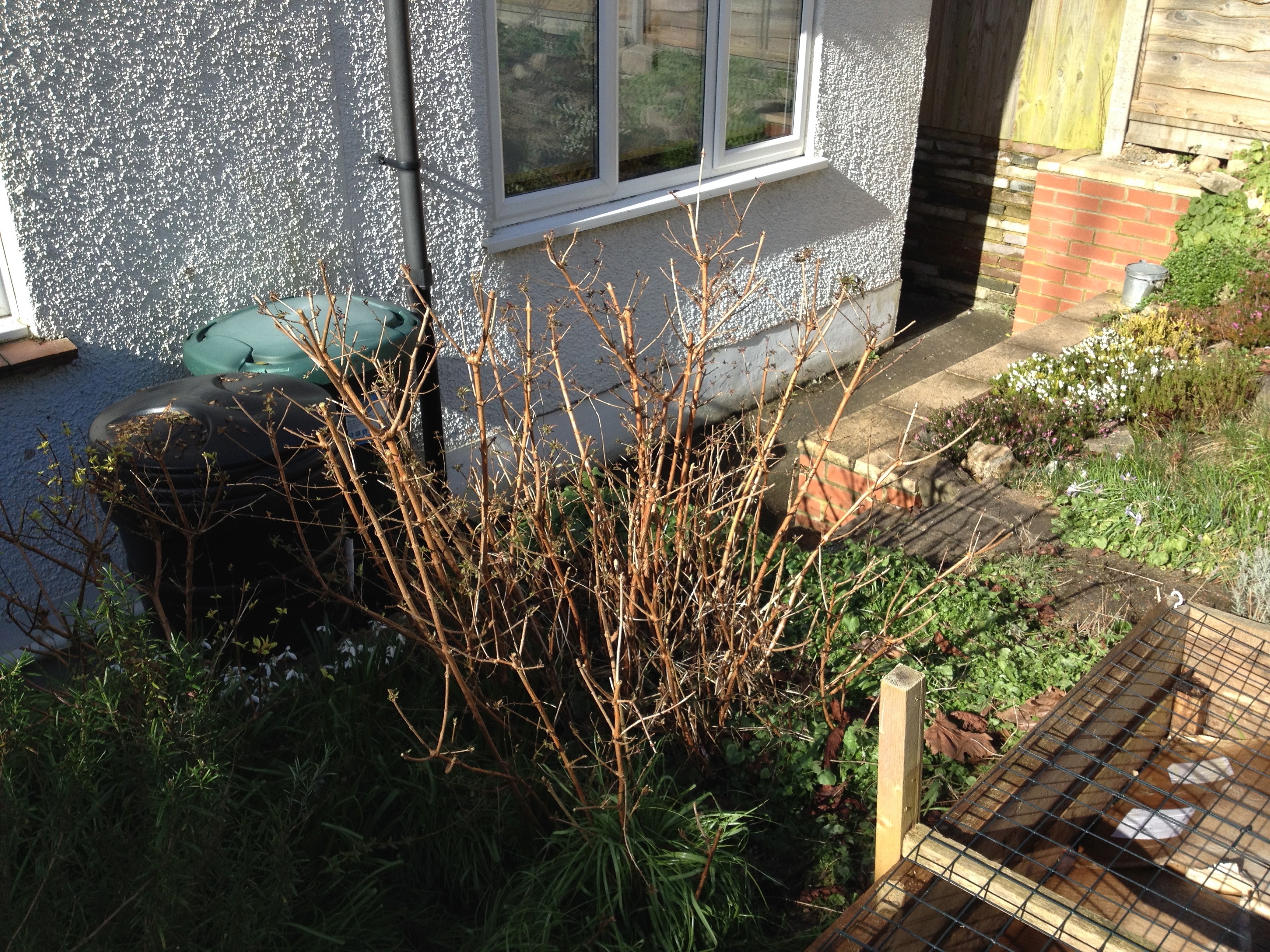
They love a good prune! I wasn’t as severe as usual. I normally wait for the leaves to drop, but this winter’s been so mild that most of the fuchsias stayed in leaf, and now the spring leaves are bursting out.
In fact, spring seemed to be bursting out all over on this sunny February day. Some of the daffodils are out, and the crocuses have been in flower for a few weeks. A bumble bee was enjoying this crocus:

The dogwoods are next on the pruning schedule. Not long now.
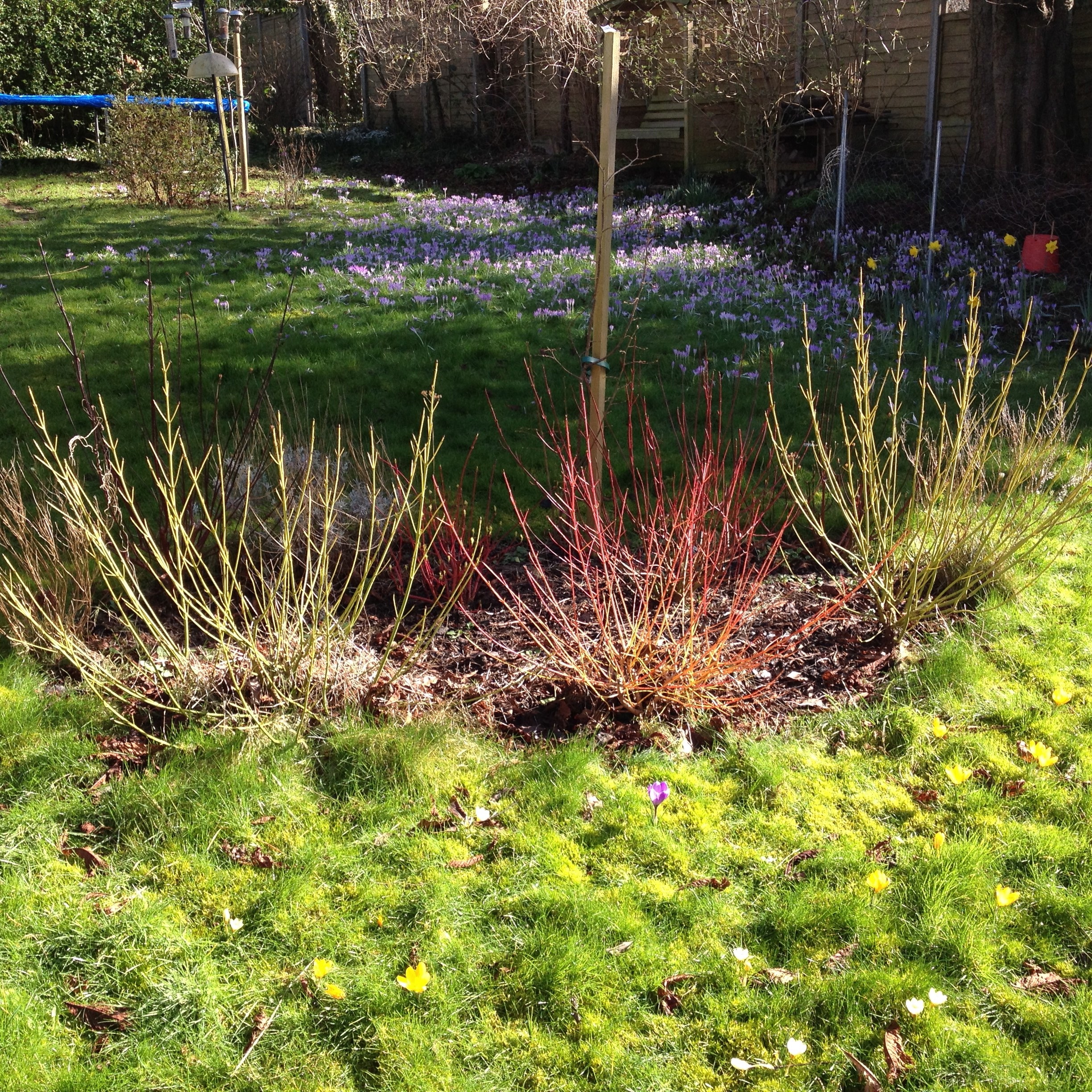
My day in the garden was tinged with some sadness, as this will be my last spring in it. A change of job means a change of house, even though my new church is only in Brighton and is nearer this house than the one we have to move to. I hope that whoever succeeds me in Hove and in this garden learns to understand it. In particular, I hope s/he doesn’t chop down my trees and continues to let it be semi-wild. For example, those brambly log piles are home to all sorts of animal life, including frogs and newts. Hey ho – it’s not my garden. However much time and energy and planting I’ve invested in it, I was only a participant in nature, and that silver birch and that liquidambar were never going to mature in my time here. But – it’s hard to be pruned.
On Friday 17th January, my 16-year-old nephew, Dan, went to a party with some friends. He took his first ever ecstasy tablet and collapsed. After a weekend on life support, he died on Monday 20th. We (including my parents, both in their 80s) were with him as he slipped away, and it took forever, and it was totally heart-wrenching.
Dan’s funeral was on Tuesday. Before a memorial service in a packed church in the afternoon, we held a private family burial in the morning. The weather was atrocious – strong wind and heavy rain. It seemed to match the occasion, as if nature was saying that the whole thing was just wrong. Was it rain or the angry tears of God? I thought of a line from Gerd Theissen’s ‘The Shadow Of The Galilean’, where the narrator, watching Jesus die, says, “If the sun could see and feel as we do, it would go dark for grief; if the earth could feel, it would quake with anger.” The world is wrong and not as it should be and not as God would have it be … yet. We seemed to be standing there forever, but how can you ever walk away from something like this?
The afternoon’s service was much less bleak as friends and family paid tribute to Dan and we thanked God for him. There was nothing bleak about Dan. He lived life to the full, with an inventive mind, a keen sense of humour and huge character. Some have said “What a waste”. And in a sense it is utterly tragic that his life was cut short at 16 years. But Dan didn’t waste his life. I think I wasted opportunities to know him better and be a better uncle, but having said that, I know that what is, is; and what has been, has been. Every day is precious, whether you’re 96 or 16, and each person puts worth into each day for those they love and maybe those further afield. But no one lives for ever … yet.
My sister and my brother-in-law have been amazingly gracious and positive. They have lost their son, but they have refused to blame anyone for his death. They have engaged graciously with the intrusion of the media to put a positive message out to other young people. They have started up a charity to promote that message – The Daniel Spargo Mabbs Foundation. There’s a link to it in this blog’s list of interesting links.
Dan knew all about drugs. He was clever and articulate, from a caring home, with loving, educated parents who took an active interest in his activities. He did, however, have an adventurous nature, like many teenage boys. He got to experiment with drugs once. Drugs like ecstasy, MDMA, and other so-called recreational drugs cause many deaths (30 from ecstasy in the UK in 2013). Most people who use them don’t react and don’t die as a result, but some do. There was nothing remotely recreational about a 16-year-old boy with umpteen tubes sticking out of him and machines working his lungs and kidneys, lying unconscious, slowly dying. People have argued that maybe he took the tablet in the wrong way, or too quickly, or whatever. The fact remains that if he hadn’t taken it at all he would still be alive. We live in an addicted culture where we tend to excuse our addictions and the various substances and habits to which we are addicted; in which young people are dying because of drugs or alcohol. These things wreck lives and I don’t care what you think about prohibition and moderation – my lovely nephew is buried under a pile of mud in a Croydon cemetery because of one little tablet.
I hadn’t meant this to turn angry. I think I’m angry, at least in part, because I recognise my own addictive behaviours and my failure to reach out and build better relationships and contribute to a stronger community in which we value and care for others. Blame is one of our culture’s addictions. In reality we are all part of a system, part of a culture, in which we are all to blame but in which the hope for change and cure lies with all of us, too. We (me included) need to choose life and love over death.
May Dan rest in peace and rise in glory.
Here in southern England, we’re not really having winter, just a rainy season. In the relatively mild temperatures, several plants in the garden are waking up early.
This elder is coming into leaf (in mid-January!):

Are plants like children? If they don’t get enough sleep, will they be crabby and crotchety all the rest of the year? How will that affect the rest of us?
Here are some pictures of snowdrops, crocus, jasmine and miscellaneous pretty purple flower. The jasmine should be in flower now, but I think the others are early.

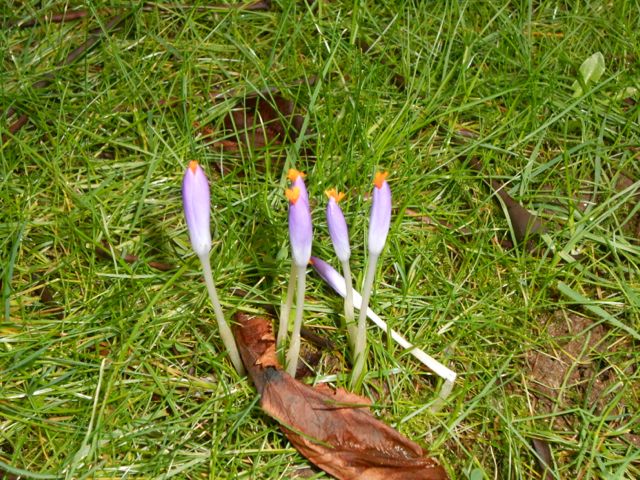


It is lovely to have something in bloom in the depths of January, regardless of whether or not it should be.
I have just come to the end of over seven years ministry with three churches in Hove and Portslade. Amongst the generous leaving gifts were some virtual gifts through Oxfam and Send A Cow: 2 rabbits, a goat, water harvesting, mixed fruit trees, a ‘Magic Muck Kit’, mosquito nets, safe water and 2 keyhole gardens.
I love the idea of these keyhole gardens. At some point, we are going to be moving to a house with a considerably smaller garden, where I’m going to have to be much more creative to make good use of the space. I’m feeling inspired about building a keyhole garden, complete with a little thatched roof.
Here’s a link to Send A Cow’s video showing how the keyhole garden is built.
I think the goats look pretty good, too, but don’t tell Mrs Mabbsonsea.
Here’s this year’s Christmas story …
You know Dasher & Dancer, Prancer and Vixen, Comet and Cupid, Donner and Blitzen. But do you recall Robert the Reindeer? No? Well there’s a very good reason for that. . .
Robert the reindeer was out with the herd in Lapland, grazing on some lovely moss. The snow was falling thick and fast. Then the snow fell thicker and faster. Then the snow fell the thickest and the fastest that any reindeer had ever seen snow fall.
Robert looked up from the snowy moss and he couldn’t see a thing except for snow. He thought he had better find the rest of the herd. He walked through the snow storm to where the other reindeer had been grazing, but he didn’t find them. Robert kept walking and walking, hoping to find his friends, but they were nowhere to be seen.
As Robert walked, the snow turned to rain and then the rain turned to sunshine. Robert kept walking. It got hotter and hotter.
One day he came across a man and a woman sitting by the roadside. There was a donkey standing near them, with her head hanging down. In fact, they all looked very fed up.
“What’s up?” asked Robert.
“I’ve sprained my ankle on a big stone,” said the donkey. “And now it’s too painful to walk.”
“You need to rest that ankle,” said Robert.
“I know,” said the donkey, “but these people are on a journey. The woman is going to have a baby soon, and she needs to get to where they’re going as quickly as possible.”
“Well, I’m trying to find my friends,” said Robert. “But I don’t mind taking these poor people where they need to go. Then I can carry on with my search.”
Well, if a donkey can talk to a reindeer, it’s not so hard to believe that the man and the woman quickly figured out that this strange creature was offering them a lift. The man helped the woman to climb on Robert’s back, and then he led the way.
The next evening, they arrived at a little village. The man knocked on the door of several houses, but the people didn’t seem very friendly. In the end they found a stable and the woman gave birth there on a pile of hay.
Robert heard some beautiful singing and he looked out of the doorway. There in the sky was the most beautiful star, and it seemed to be singing to Robert. He felt that he had to walk in the direction of the star, so he set off.
Robert walked and walked. He rested in the daytime, so that he could follow the star at night. As he walked, it got colder and colder.
One day, Robert saw a reindeer, and then another reindeer, and then another. He was back with his friends in Lapland! They were really pleased to see each other again.
Back in Bethlehem, no one knew what a reindeer was. So when people told the story about Jesus being born in a stable, they cut out the bit about the reindeer and pretended that the donkey had taken Mary all the way. They thought it wasn’t a very important detail, because that’s the way many people think about animals, and Robert the reindeer was soon forgotten.
But God had seen everything. God had seen how, even though Robert wanted to find his friends, he had chosen to help a poorly donkey and a man and a woman in need. Because of Robert the reindeer, God’s son had been born in the right place, and God was very pleased about that. So God gave Robert the reindeer a special present. And because God didn’t want to cause the reindeer any problems, he gave the same special present to all the reindeer, and they were all delighted.
So now you know why you haven’t heard of Robert the reindeer. You also know now why reindeer are so proud of the fantastic crown of antlers that they wear on their heads.

I’ve just had a very timely retreat at Sheldon, in Devon. I spent much of the week putting off dealing with the big emotional issue that I’ll soon be leaving my present churches and moving on. But if you’ve got to deal with something tough, or try to avoid doing so, you may as well be in a place of extraordinary natural beauty and an atmosphere of loving care. So I was in the right place.
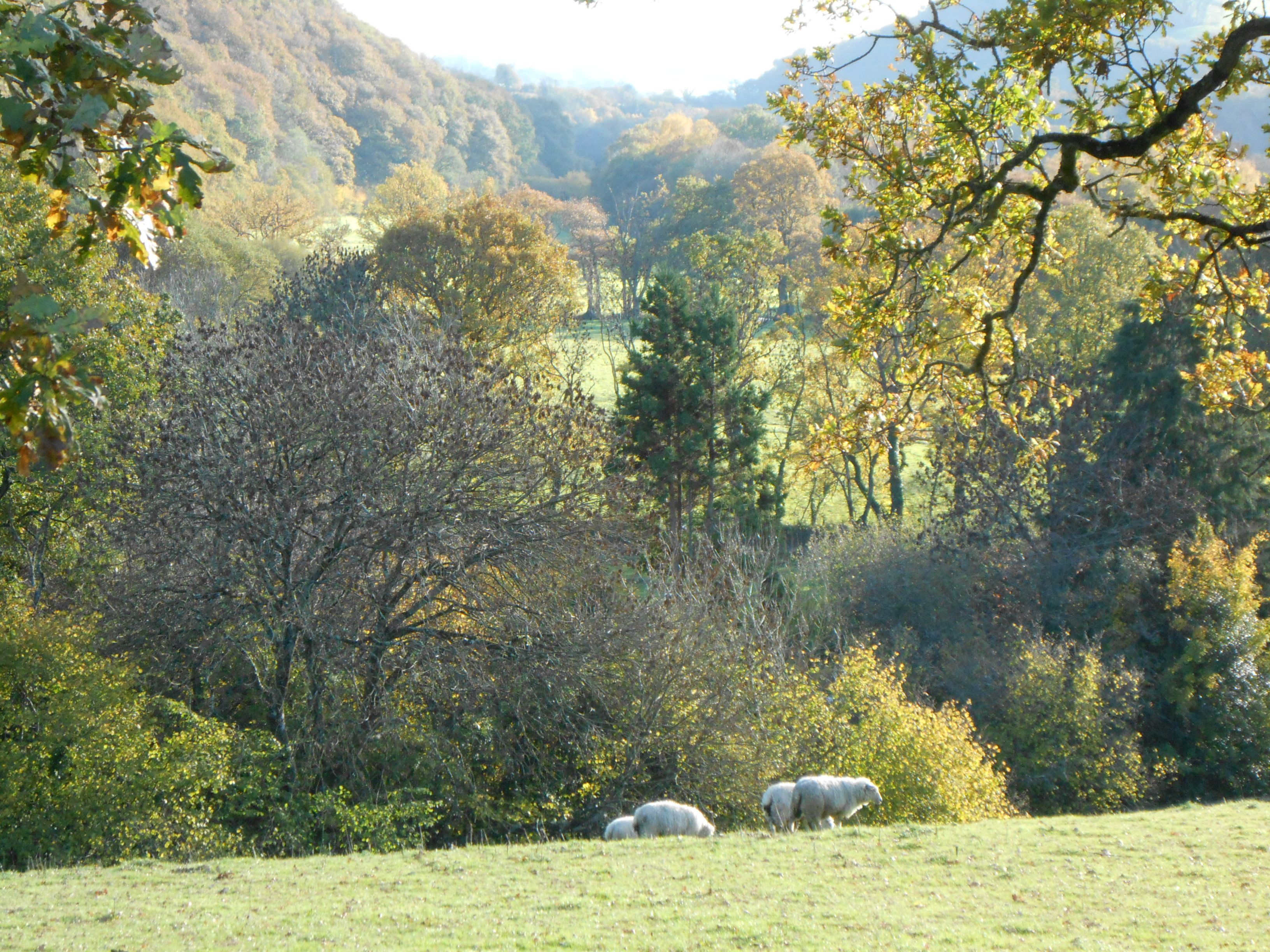
On Sunday morning, there was a thick frost. In the twilight, I walked out to a sheltered dell and sat and waited for the sunrise, which I expected over the crest of a hill quite soon. It was a beautiful morning, crisp and quiet. No wind blew, no birds sang, all the humans were snug and quiet in their distant beds. The only sound was the patter of leaves dropping from an ash tree. I sat and waited for the sun. I waited and I waited. I could see sunshine on the hills behind, across the valley to the west. Maybe the sun was going to leave me out today. I waited and I waited. Maybe the sun had risen as much as it wanted today. There was a bright patch just above the crest, but it was just sunlight diffracting in a cloud, that drifted away. I waited and I waited, growing steadily colder. Then it came – at first a dazzling too-bright peep but once it had started, the sun rose rose very quickly. The dell was filled with light. The leaves shone vivid green. The birds started to sing. It was stunningly glorious.

“My soul waits for the Lord,
more than watchmen for the morning.”
(Psalm 130.6)
God does come. In his time, and with light and fire for a frosty world, and with the gentle rain of blessing, like falling leaves in an autumn sunrise.
“O Israel, hope in the Lord!
For with the Lord there is steadfast love,
and with God is plentiful redemption.”
(Psalm 130.7)
This is what an autumn lawn should look like:

It’s not a very good photo, but you get the idea. The leaves are supposed to lie under the tree, rot down with the help of the fungi and bugs that eat them, and then enrich the soil to feed the tree. The blackbirds flick through the leaves to eat some of the bugs. A man in wellies kicks through the leaves just for the fun of it. If you rake them up, none of this good, life-giving stuff can happen. A lawn rake is a tool of the devil, and don’t get me started on motorised leaf blowers. Leave the leaves alone! Everyone is happier when things are left the way they should be.
The president of the World Bank, Jim Yong Kim, was interviewed on Radio 4 this morning. He was responding to Typhoon Haiyan, and while he was clear that particular weather ‘events’ can’t be attributed to climate change, he claimed that climate change is making these extreme events more frequent. He said, “Category 5 typhoons used to be referred to as once-in-a-lifetime events. We’ve had two in the last month.”
The thing that nearly made me choke on my porridge was when Mr Kim said that Bangkok could be underwater by 2030. That’s just 16 years away. He said, “This is not something for our grand-children’s grand-children. This is something we’ve got to face by 2030.” Kim argues that we need to invest in prevention – that every dollar invested in prevention will save three dollars – and that we need to tackle climate change now. He said that we must focus on what we agree on and take action right now and stop arguing about climate change.
It makes me feel I’m in cloud cuckoo land, fussing about light bulbs and cycling and other little ways of cutting the amount of carbon burnt on my behalf. Maybe that was our task in the 1970s and 80s. Now we need to do much more, and quickly. Not only do we need to cut our fossil fuel use by a factor of 20 – unimaginable! – but we also need to start talking urgently about how to live well in a world that is changing rapidly – a world where many of the major cities and islands will soon (16 years?!) be uninhabitable unless you’re a fish.
I recommend reading Bill McKibben’s book, Eaarth.

His basic idea is that it’s like being in a sci-fi story where we’ve landed on an alien planet. As is so often the case in these stories, it looks somewhat like earth, but it’s different and to live there will require ingenuity and imagination. He calls this new planet Eaarth. McKibben suggests a number of strategies for making a good life for all on this new planet – living lightly, carefully and gracefully.
One big strategy is to decentralise. Power generation is one good example – moving away from large generating stations (whether fossil-fuel or renewable) and their inefficient distribution lines, and installing small, local and renewable generators. Food production is another good example where many of us can grow some food, whether individually or in groups, rather than relying on industrialised agriculture, which is increasingly inefficient (“It takes ten calories of fossil energy to produce a single calorie of modern supermarket food.” (Michael Pollan, quoted in Eaarth p.157)).
McKibben says a lot more than this – read the book! It’s very good.
The big message is we need to change; we need to change a lot; we need to get going with the change now; and we need to do it together. We need to work for, as WWF puts it, “A world with a future, where people and nature thrive.”
I had a day at London Zoo. I was there for the John Stott Memorial Lecture, this inaugural year sponsored by A Rocha and given by Chris Wright from Langham Partnership and David Nussbaum from WWF. The lectures were very good indeed, but the animals were better.
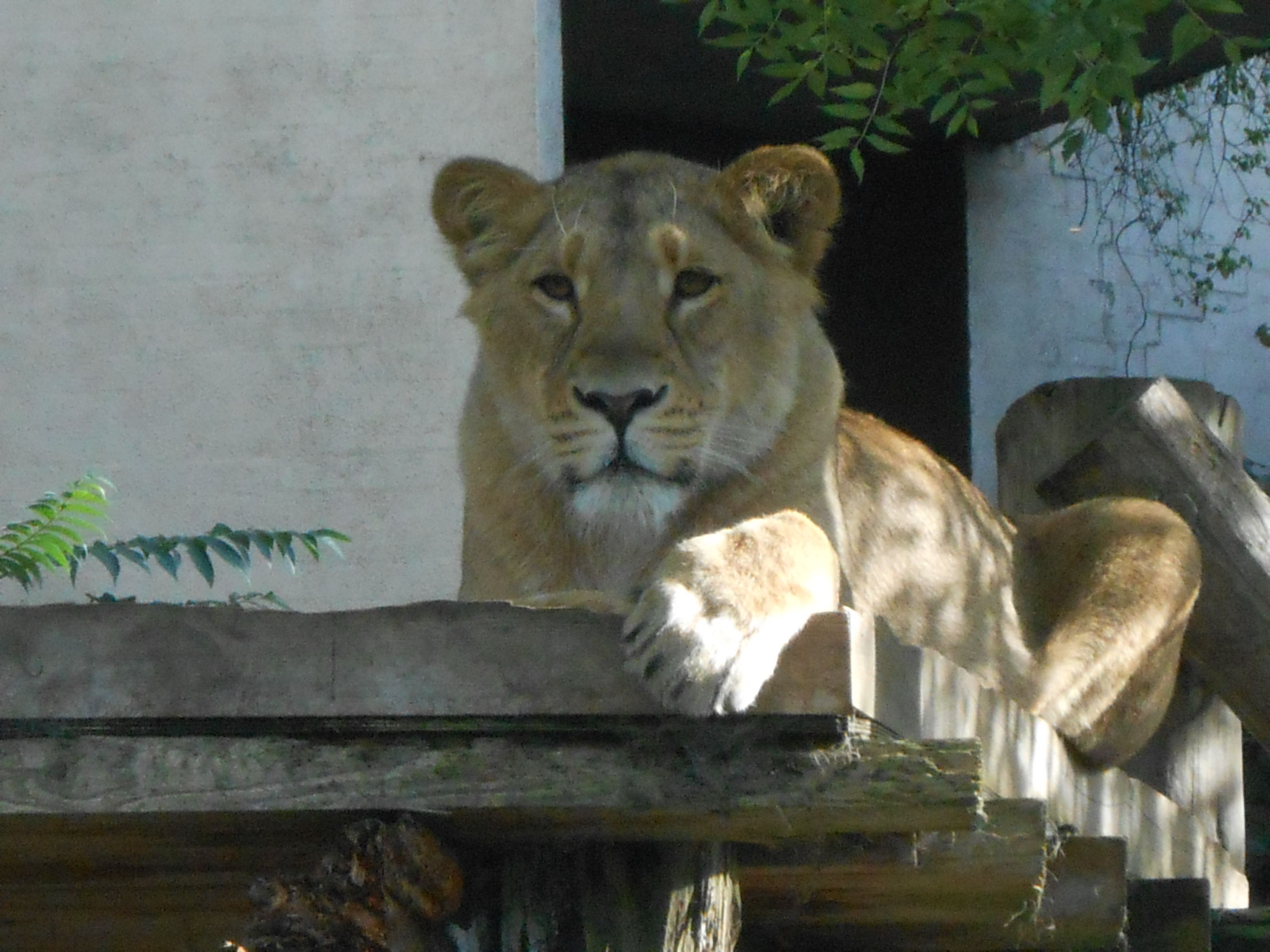
There were several parts of the zoo where you can walk through the enclosure with the animals. My favourite was the butterfly house. It was awe-inspiring to walk amongst these beautiful, fragile creatures.
It was simply fun to watch the animals – to see them in real life – lions, tigers, gorillas, a two-toed sloth, birds, fish, komodo dragons, giraffes, penguins, otters, bats, naked mole rats, bush babies and much much more!
A lot of the zoo had an explicit conservation theme. But it put me in mind of Joni Mitchell’s song, Big Yellow Taxi: “They took all the trees and put them in a tree museum, and they charged all the people a dollar and a half just to see them.” Substitute trees for animals, and up the price rather a lot, and you have a zoo. It’s so sad to think that if we don’t change our ways, that might be all we have left of some of these beautiful animals: specimens in an animal museum. To quote St Joni again: “Don’t it always seem to go that you don’t know what you’ve got till its gone.”
I hope that if other people get as much enjoyment from the zoo as I did, they will think hard about this wonderful world we share with the rest of nature, and we’ll do better at looking after it.

WWF’s vision is “A world with a future, where people and nature thrive.” Sounds like it could be straight out of the bible.
I made a film of my day – click here to watch it.

 Alex Mabbs