Natural time

It’s now three weeks since I finished my sabbatical and returned to work and I am really struggling to adjust. Three months of camping and hiking and staring at trees (as well as a few other trips and things) must have really slowed me down and it’s been quite a shock to come back to the pace of ‘normal’ life. I think I hadn’t realised how fast the merry-go-round was spinning until I tried to climb back on it. It’s just exhausting. And I think, “Why?” Why are we so accepting of such a fast pace of life, or is it just me who is struggling to cope?

Trees have a different timescale. I read somewhere that oak trees take 300 years to grow, 300 years to live and 300 years to die. To sit and spend a couple of hours watching the leaves flutter on a tree is less than a blink of an eye to the tree. I find myself wishing I could just be amongst the trees again, because I think life seems to make more sense in the woods.

At the other end of the spectrum, perhaps, are insects like the Mayfly, who lives in its adult state for just one day. In Rob Cowan’s brilliant book, ‘Common Ground’, he writes about the day of the adult mayfly and weaves that story around a story of some young people seizing the moment and living for the day.

Somewhere between the 300,000 days of an oak tree’s life and the one day of the mayfly, is my life. I wonder, what is my natural time? What is the natural pace for a human life? I can’t sit around all day staring at trees as if I’ve got all the time in the world, because I don’t. Some things have to be done, to live, to work, to love. But they don’t all have to be done right now as if today is all I have and I must frenetically pack as much into each minute as possible. In fact, much of the living, working and loving can only happen well if given time for paying attention, to listen, to think and to feel. How can we – how can I – live like a human being in a mayfly culture?

Living in the woods

img_20160921_104038I’m just back from a short week in a cabin in a small wood in Devon. It’s part of the wonderful Sheldon retreat centre (Society of Mary and Martha) where I’ve been for luxurious retreats in the past and where we go annually for a clergy family holiday.
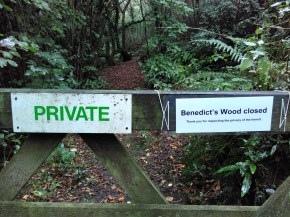
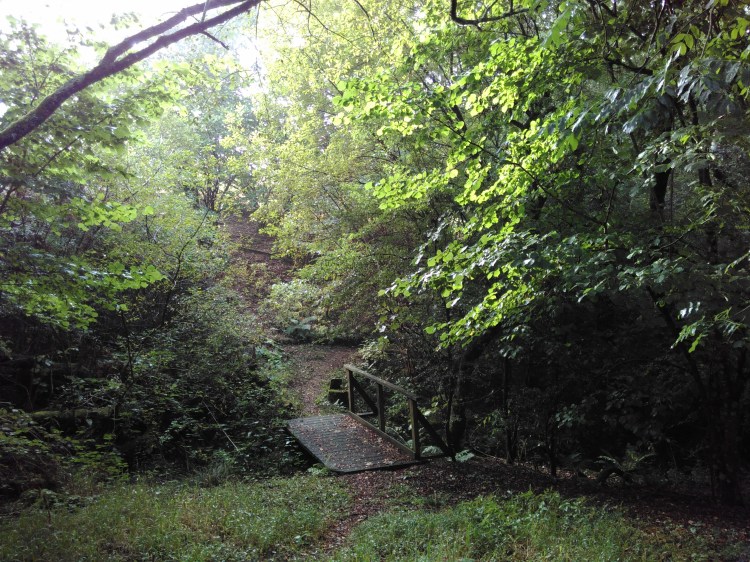
The cabin is pretty basic, although it has electricity and a cold water tap. The best part was having the wood to myself – part of the deal is ‘Go away’ signs to hang on the gates. img_20160919_150304Of course, I didn’t have it to myself. I was sharing the space with the creatures for whom this is home, from the little mouse living in a hole in the porch, to the rabbits across the bridge, the birds, spiders, insects and so on. The best wildlife moment for me was sitting outside the cabin one evening, enjoying watching dusk fall on the wood, when I heard a tawny owl’s “kee-vick” call. All of a sudden, there she was, clinging to the trunk of an ash tree, not seven yards away. She turned her head around, gave me a long stare out of big black eyes, and flew off silently. I hadn’t seen a tawny owl in the wild before, so it was a special moment, made more special because I had earlier been reading about tawny owls in Rob Cowan’s fabulous book, ‘Common Ground’.
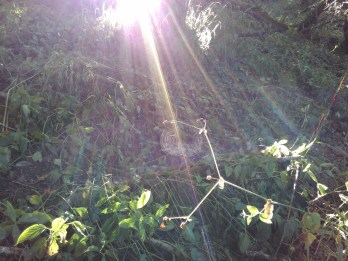
I just love being in the woods. There’s something holy about dappled light falling through branch and leaf. I love the smell of damp leaf mould in the morning after rain. There is so much life in a mixed woodland, even a small one like this, that it feels like a privilege to live amongst it, even as a short-stay guest. Trees seem to keep their own time, much img_20160922_095556longer than mine, that means that a couple of hours spent watching the leaves flutter was just a moment’s glance. At the beginning of my stay, I had that panicked sense, common for me at the start of any retreat, that I hadn’t brought anything to do, not even a notebook. As usual, that feeling was mingling with a sense of urgency to get something meaningful out of the time. It took about a day for that inner urgency to quieten down, and I found that while there was little to do, there was plenty to be, and that even with such a good book to look at, there was plenty more interesting to look at, not going on but just being, all around me – the life of the woods.
img_20160921_091954img_20160922_094831img_20160922_162815

img_20160922_094949img_20160922_094704

Planes, trains …

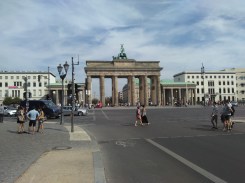
At the end of August, Mrs Mabbsonsea and I celebrated 25 years of marriage with a short trip to Berlin. We first met there in 1989, spending two weeks on the same volunteer team. It was just three months before the Berlin Wall fell in November that year and we have wanted to re-visit for some time and see how the city has changed.

img_20160828_140014
The Brandenburg Gate

What people seem to be finding hard to believe, as we bore them with our holiday stories, is that we travelled there by train. Not part of the way, but all the way. And back. Who would do such a thing? It cost two or three times as much as air travel and took much longer – about 14 hours, door-to-door.

Flying uses a lot more fuel per km than trains, short flights more so as a greater proportion of the journey is take-off and landing. For that reason, I have decided not to fly. I have been thinking about the givens we work with. For many in my society, their non-negotiable given is that they should be able to do what they want (if they can afford it, and if not, get it on credit). Two examples: they should be able to travel where they want and they should be able to use as much electricity as they want when they want it. But what if the non-negotiable given is the chemistry of the atmosphere? For that to be non-negotiable, other compromises will need to be made, which may be costly. I am lazy and a product of my culture and I don’t make enough of those compromises, but one thing I am doing is not flying.

img_20160828_142904
The Reichstag

Travelling by train from Brighton to Berlin, changing in London, Brussels and Koln, gave us a sense of the distance we were travelling. Through the window of the train (except when we were in the Channel Tunnel) we could see how we were moving across the earth. A high-speed train distorts this a bit because I don’t have much of a reference point for what 250 km/h really means, but this sense of place and movement was enhanced on the outward journey because the high speed train broke down. We had to board a slow train at Brussels and travel for an hour and a half through Belgium. At Verviers, buses had been laid on which took us on an extraordinarily scenic tour through the Ardennes to Aachen. There we caught another slow train to Koln. None of the sense of the distances or the grandeur of the countryside or the width of the River Rhein, or views of the cathedrals at Koln or Aachen (where Charlemagne was crowned Holy Roman Emperor in 800), would have happened from a plane. Nor would a nostalgic glimpse of the Schwebebahn, Wuppertal’s historic suspended monorail, which I rode during a school trip in 1980. I think a train goes too fast for my soul to keep up, but it is a whole lot less disconnected from reality than an aeroplane.

img_20160829_152014
Memorial to the Jewish people killed in the Holocaust

Berlin is a long way from here. I think that length of journey is about my limit. So there is a lot of the world I will never see, even if I manage to cobble together enough leave at some point to do a more complex expedition. Part of me feels a bit sad about that, but then even without my flying ban, I couldn’t visit everywhere. I read recently that Jesus lived a fulfilled life without seeing the Grand Canyon. Our greedy consumption of as much oil as we can afford has removed many of the limits to our expectations, but like most over-consumption, it doesn’t seem to have made us happier or better people. Perhaps it is time that we put some limits back on what we will do individually, in order that the limits might be expanded on the chances of the world having a flourishing future.

img_20160828_103652
Berlin Wall Memorial Park

We loved our trip to Berlin. It’s a fabulous city, with so much thought-provoking and interesting history, incredible architecture and with a great big wood in the middle of it. I’d recommend a visit … but only if you travel there by train!


At one with nature at any price

Yesterday I set out on a hike from home, over the Downs, to a campsite in the woods about 12 miles away. It was always going to be quite a challenge as I haven’t walked that far with a big pack since my legs were younger, but I liked the idea of doing the round trip from home on foot (although Mrs Mabbsonsea’s offer of a lift for the first mile was too good to turn down – and perhaps that signified what was to follow …)

I hadn’t gone more than half a mile, at 9am, before the sweat was pouring down my face. It wasn’t the heat so much as the humidity. Without a breath of wind, the humidity was so high that you could feel the water in the air. I pressed on, feeling increasingly uncomfortable, miserable and tired. Shortly after crossing the by-pass, out of the town and into the fields, and after much dithering, I gave up. I turned around, walked back to the nearest bus stop and caught a bus home. The weather had beaten me.

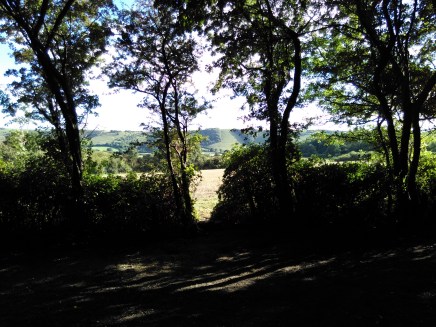
After a shower, a change of clothes and lunch, I loaded my pack into the car and drove to the campsite. Well, I had already paid for it, and I really wanted to spend a night in the woods. I had a fantastic time, with a splendid view of the Downs from my clearing. I listened to the birds, I watched the sunset and I watched my camp-fire until bed-time.

img_20160906_165650

Staring into the flames, it struck me how ridiculous I was being and that I’m a very bad ecologist. Nature had made my plans unworkable, so I beat nature by burning some petrol – precisely the kind of thing I object to when moaning about patio heaters, air travel and politicians saying we have to keep the lights on. I like to argue that we have to start accepting limits to our behaviour and our consumption, e.g. if the sun isn’t shining and the wind isn’t blowing, you’re going to have to make a cold drink because there isn’t any electricity (burning fossil fuels not being an option). But here was I driving my car because I’d booked a campsite and arranged the time away and I was going to go, come rain or high humidity.

I could let myself off the hook a little by saying that our leisured consumer culture runs deep in me. But the truth is that I had choices at every step but I didn’t think it through. Another truth is that I had a lovely stay in a rather quirky but rather fabulous woodland campsite (Blackberry Wood, near Streat, for those of you within striking distance). If I hadn’t planned it and booked it, I know it wouldn’t have happened at all. But how do I live more in harmony with the weather in my highly-scheduled life? I don’t want to wait until the costly tech is no longer available – I want to do the right thing now. I have much to learn … and there’s some irony with this lesson in that the trees started to teach it to me in Blackberry Wood on my motoring trip.

Dartmoor

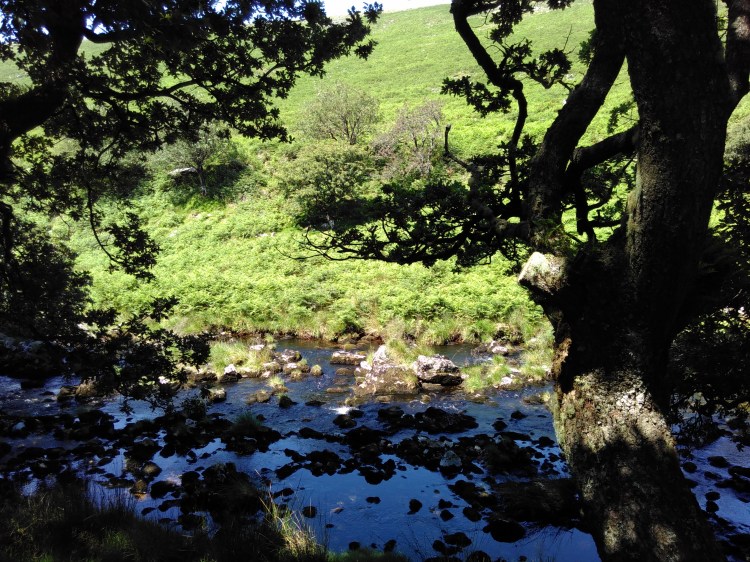
I spent a few days on Dartmoor, camping in a small oak wood up the valley of the River Erme. Piles Copse is an ancient woodland, once part of a farmstead. It’s a beautiful and peaceful place, ascending from the river up into dark, impenetrable, boulder-strewn woodland, filled with oaks so old they have beards. It was fantastic to spend time in it.

IMG_20160719_114419

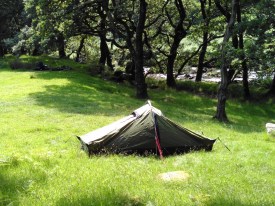
And yet … not in it. I could only spend a few days here because I’d carried enough food with me. I could only drink safe water because I’d brought the equipment with me to purify it (there’s a lot of poo on Dartmoor). I could only take shelter from the voracious midges because I’d brought a tent. In fact, I felt it was less a case of being in nature and more like being against nature. Being attacked by swarms of midges quickly shattered my romantic view of the peaceful community of creation. They may well, for all I know, have been thanking God for the food he’d provided for them, as I would have done if I’d caught and cooked one of the fish in the river. Thinking of Isaiah 11, maybe one glorious day the midge shall eat sap like the aphid, but even this magical sylvan grove was far from paradise on that sweltering, still, humid evening.

IMG_20160720_163120
Water purification stage 1

This struggle against nature goes almost back to the beginning of the biblical story, in the curse laid on Adam in Genesis 3. The transition from foraging to hunting to settled agriculture was possible because we learned how to subdue the earth. But in the end, the earth, on which and from which we have lived through our toil and sweat and struggle against it, will subdue us – “To the earth you shall return.” (Genesis 3.19). A ruined medieval farmstead high on Dartmoor was a good place to reflect on this. Life must have been hard for those farmers – too hard in the end, I guess.

IMG_20160720_070336
Water purification stage 2

So I think any scheme for harmony between humanity and majority-nature, and any spirituality of nature-connection, must avoid too much romance and take account of the reality of how technological humanity has evolved against nature. We are not simply animals with tools. Our use of technology over millennia has made us what we are today and if the technology were taken away, we would quickly lose the struggle. But perhaps being aware of this could help us set better limits on that struggle and on the harm it is doing to fellow creatures. Spending more time and effort in paying attention to the life around us and enjoying it, combined with humility and frank acknowledgement of how much harm we can do, might help us make vital moral choices about how we use technology and for whose benefit.

IMG_20160719_153247

One further reflection is about the backpacking experience. Concern for minimal impact made me very aware of my footprint on this sensitive environment. I had to think carefully, firstly, about the food I took because I had to carry all the rubbish off the moor; then about how my washing waste could be minimal both in terms of where I put it and how much precious water I used; then about my own waste. The moor was very dry, so I sourced my drinking water from the river, which meant having to purify it. This took time, as well as gas (itself on a limited supply), and I had to balance keeping myself hydrated in hot weather against how hard-come-by the water was.  Then there’s having a minimal impact on yourself, in the sense that whatever you want to have on the expedition you have to carry and every ounce counts. It is sobering to reflect on how little I needed on the trip compared with how much I use in normal life, when water and fuel are on endless supply, the waste goes down the drain and some nice men turn up each week to take our rubbish away somewhere, and the impact of my consumption is not borne by me. I wouldn’t want to live a nomadic life, although an increasing number of people are being forced into one. I wonder if part of the problem is thinking “This is it, this is the good life,” when in fact I am a pilgrim on a journey and not yet settled in a world of peace and flourishing. Settling too soon is, in a sense, trying to cheat God and leads to the huge levels of destructive impact that are presently threatening our civilization. As The Eagles sang so poignantly on ‘The Last Resort’ – “Call someplace Paradise, kiss it goodbye.”


Ukulele

Here’s a story that didn’t make it into the bible. I’m sure it must have made the short-list, though.

When Noah was loading the animals onto the ark, he made sure he took as many as the ark would hold, and then some. That meant that there was very little space for any personal possessions. But, however tightly you pack a space, there’s always room for a ukulele and Noah found he could take two.

Noah and Mrs. Noah used to play their ukuleles on the stormy evenings afloat in order to calm down the animals and cheer them up.

That means that all musical instruments on the earth today are descended from that pair of ukuleles, and it explains why nothing cheers the heart like a song on a uke.


Identity

I have been doing a bushcraft course, with the assessment weekend coming up fast. One aspect of the course is natural history. We have had to learn to identify trees and woodland plants, as well as animal tracks and signs.

Out and about in parks and in the countryside these past six weeks, armed with my pocket tree guide, I have bored Mrs Mabbsonsea and other companions with my constant stopping to figure out what ‘that one over there’ is. What’s frustrated me is that the pictures in the book don’t usually look much like that one over there, but I have found the process more fascinating than frustrating. I feel that the need to notice in order to learn has made me much more attentive and appreciative of the living being in front of me. I feel that the desire to assign a name to that one over there connects me to it – which was the broad and basic point of doing the course anyway.

In the bible story of Genesis 2, the man gives names to the animals. I’ve tended to see that naming as an act of taking power over them, but my recent experience makes me wonder if I was wrong. Perhaps it was an expression of humble connection in that ideal place: taking an interest in another being and noticing what is special about it. “Hmm… this little brown bird looks very similar to that one, but their beaks are a different shape and one is happy to feed in the trees, but the other only feeds on the ground.”

Richard Bauckham, writing on the praises of creation in Psalm 148, says, “Sharing something of God’s primal delight in creation enables us also to delight in God himself.” I think he is on to something. Perhaps as I learn to identify more beings with whom I share life on earth, the deeper connection that results from that deepens my understanding of my own true identity as one special being in community amongst many.

Climate Action

I say I hate meetings, but I seem to spend a lot of time at them and prioritise them in my diary. I suspect that’s because I secretly like them. There’s something about being on a committee that makes me feel important. I like being with people, too, especially if they’re my friend or if they’re important, or both. Some decisions are important and have an impact, especially if someone acts on them. My confession is that, more often than should be, that someone is not me.

I think I need to balance the talking with more action. That’s not to say I don’t do anything already. In fact, Mrs Mabbsonsea and I think hard about how we live and have taken quite a lot of steps over the years to live less destructively and more creatively.  But I am becoming conscious of how often I make excuses (probably there’s a meeting I have to go to) and how little I dirty my hands.  And I want to change.

Last Friday I went on my first student demo. I’m 50 years old and have never been on a student demo. It was part of the global day of action for fossil-fuel divestment. I was tempted to say, it’s my first day off in 2 weeks, I’m tired, I’ve got lots of little jobs to do in the house, blah blah. But I want to change and become a man of action – a man with dirty hands – and so I went tIMG_0538o Sussex University and helped make a web of red ribbons across the square for the red lines (like 1.5C temperature rise) we mustn’t cross but that we will cross if we keep giving financial support to the fossil-fuel industry, and I joined in with the chanting and talked to some people about what was going on and then helped take it all down again and went home.


IMG_0543

OK – it wasn’t much of an action and while it was the first student demo I’d been on, it certainly wasn’t the first demo of any kind, not by a long way. But what changed was that I ignored some perfectly legitimate excuses and went. I have another idea for this Friday, and the excuses are limbering up. I was wondering last week what I would do for Lent this year, and perhaps this is it – a kind of anti-Lent – to counter the excuses that tempt me to do nothing with the self-disciplined choice to act.


whyPhone?

In my talk to a group of international post-grad students, there was a section about consumerism in relation to climate change. I critiqued our addiction to more stuff and to the latest thing and advocated a simple life that used less of the earth’s resources. At the end, I invited questions. The first question was, “Can you show us your phone?”Photo on 19-01-2016 at 14.05

What could I do? I knew he’d got me. Reluctantly, I had to pull my iPhone out of my pocket. Yes, I could say it’s only an iPhone 4; I could say it wasn’t the latest model when I got it; I could say it’s not mine, it’s provided by my church. But I still felt a fraud. I’ve always known there are more eco-friendly phones on the market. There are certainly cheaper phones. There are simpler phones – do I need a smart phone? In fact, do I need a phone at all?

Last week there was a piece in The Guardian by Steve Hilton, who runs a Silicon Valley start-up and hasn’t had a phone for over three years. Hilton writes that at the end of his first week without a phone he felt more relaxed, carefree, happier. He questions the way everyone is forever anxiously checking things and says that he finds something menacing in our need to be connected and contactable all the time. He says that people are incredulous when they hear about his phone-free life, saying, “But how do you live?” The most common response, though, is, “How fantastic that must be. I wish I could do that.”

Do I wish I could do that? Part of me does. It’s only two years old, but my iPhone is approaching the end of its natural life. I have to re-charge the battery at least once a day, and that’s with hardly using it. The memory is too small to update the operating system. I object to this built-in obsolescence. Amnesty International alleges that thousands of children, some as young as seven, are doing back-breaking work in terrible conditions mining cobalt in the Democratic Republic of Congo (DRC). Cobalt is used in the lithium batteries in our phones (and other devices) and half the world’s supply comes from DRC. By having a phone, I am the rich man for whom these African children work like slaves. It’s not the only way my consumption of stuff causes others to suffer, but it’s one way.

Maybe I don’t need a smart-phone. Maybe I don’t need a mobile phone at all. I don’t keep checking things on it. Emails only come via wifi and I’m not perpetually logged in to Facebook or a news service. I use a paper diary. If you phone me and I’m with someone, I’m not going to answer – it’s rude. But the maps are useful. Having all my contact details on it is very useful. Having a camera on me all the time is handy. Texting is the main way my son, at university 350 miles away, keeps in touch with me. And what about emergencies? Somehow we used to cope, but the world has changed and the world expects us all to have phones in our pockets.

Asking if I need something by weighing up the pros and cons in terms of my convenience, is the wrong question, I think. The real question is about the justice of the level of my consumption. The real question may be about the price paid by others for my choices, answered in attending not to my needs but the needs of seven-year-old cobalt miners.

What would you do?


Saving Santa

Nicholas stared out of the window at the night sky, unable to sleep. “How did it come to this?” he wondered. It had started out so well – being nice to children, giving them little gifts, bringing a bit of magic and joy into their little lives. The big mistake was teaming up with that dastardly deer, Rudi “The Nose”. If only he hadn’t listened to Dasher and Dancer, he thought, but he couldn’t really blame them. Like him, they weren’t getting any younger and it seemed like children demanded more each year. It was a struggle to get everything done, and there was little joy in the work. So when Dasher and Dancer mentioned this reindeer they had met at a special club they belonged to, Nicholas agreed to meet him and hear his ideas.

Rudi made it sound so easy. He would provide a bigger sleigh and a couple of extra reindeer to help pull it. Greater speed and greater capacity would get the job done with less effort. When, next Christmas, Rudi suggested an even larger sleigh, Nicholas didn’t need convincing.

The next winter, elves started knocking on the workshop door, looking for casual work. They came just at the right time, when Nicholas was wondering how he would ever source and wrap the huge number of presents the children were asking for, let alone load them onto the sleigh in a sensible order. The elves were a god-send, or perhaps, a little voice whispered within him, a deer-send.

Before long, Nicholas’s latest sleigh was so big that he had to employ nine reindeer to pull it. He also had fifteen elves on permanent staff throughout the year. Not only did he have to pay their wages, but he had paid for a new cabin to be built for them to live in. Well, he hadn’t paid for it yet. Like always, Rudi’s terms had been very attractive, if rather vague, and Nicholas was sure that his expanding enterprise would soon start turning a profit.

At least, he had been sure. But each year, the costs seemed to increase. It wasn’t just the elves and their cabins, the extra reindeer and the upgrades to the sleigh and the vast industrial facility they still quaintly called the workshop. Children who, long ago, had been happy with nuts, oranges and sweets in a stocking, now wanted electronics and all sorts of expensive gadgets, leaving huge plastic sacks out for Nicholas to fill. When Rudi started to mention getting some return on his investment and started to mention numbers, Nicholas was stunned. He hadn’t noticed how much he’d let things get out of hand. Rudi started getting a lot less pleasant. The elves started complaining about their pay and conditions. Even the reindeer became surly and Nicholas was sure they were calling him names. It seemed that Rudi had some kind of hold on them all. Nicholas couldn’t help feeling it had something to do with that strange, almost-glowing, red nose of his.

It was the night before Christmas Eve and Nicholas couldn’t sleep, he was so worried. As he lay in his bed, looking through the window at the stars, one star seemed to shine more brightly, as if it were calling to him. He tip-toed past the snoring elves and through the workshop, piled high with toys and games, computers and TVs, all destined for children’s bedrooms in a few hours’ time. Past the sleeping reindeer, and he was outside in the silence of the night.

There was the star! Nicholas walked along the path made in the snow by the star’s light until he came to a cave. In the cave were three men kneeling in front of a feeding trough. In the trough was a baby, and the light shining from the baby was brighter than any star (or any reindeer’s nose, for that matter).

Nicholas watched as the three men offered presents to the baby. Nicholas crept in and knelt beside them. “I’m sorry,” he whispered. “I’m so sorry. I had forgotten who it was all for. Every gift was for you. Every child was you. And I’ve forgotten that. I’ve forgotten what love looks like and what love looks for.” As Nicholas knelt in front of the baby, his tears rolling down onto the ground, he felt a hand touch his shoulder. It was the child’s mother. She gently helped him up, wiped his face, kissed his cheek and turned him towards the workshop. “Thank you,” he said. Nicholas knew what he had to do.

Around the back of the workshop, Nicholas quietly opened the door of a tumble-down shed. With all his strength he pulled out the old sleigh. Once on the snow, the going was easier and by the time the sun started to rise, Nicholas was well on his way, away from Rudi, away from the elves, away from the gleaming piles of stuff, away to a new life with nothing but an empty sleigh and a heart so full he thought it might burst.

*     *     *

The presents still arrive in children’s bedrooms every Christmas Eve, just like before. Children still write their lists and dream of a jolly man in red coming down the chimney with a sack full of toys. Whether the toys are actually delivered by a jolly man in red or by an over-worked elf on a tight schedule, no one is awake to see.

Meanwhile, sometimes, and not only at Christmas, a young woman at her wits’ end to see any option other than the streets will awaken to find a small bag of money next to her pillow. Sometimes, sailors who have survived a terrible storm will tell tall tales about seeing a man through the spray, standing on the prow, pointing at a star that guided the ship to safety. Sometimes, a prisoner, wrongly accused, will be awoken and told that her fine has been paid and she can go free. Sometimes, a child who hasn’t eaten for days will discover an orange and some nuts in their shoes in the morning.

And there’s a shabby-looking mini-cab driver in Basingstoke with a slight Norwegian accent, who can’t be found as often as he can, whose old car doesn’t so much rattle as jingle, who doesn’t say much, but when he looks at you it’s as if he’s looking at royalty. Many of his customers don’t even notice, but some who do find their heart swelling and something thawing inside them and a few wonder if it might be possible in these days to be a saint.