Time To Cycle

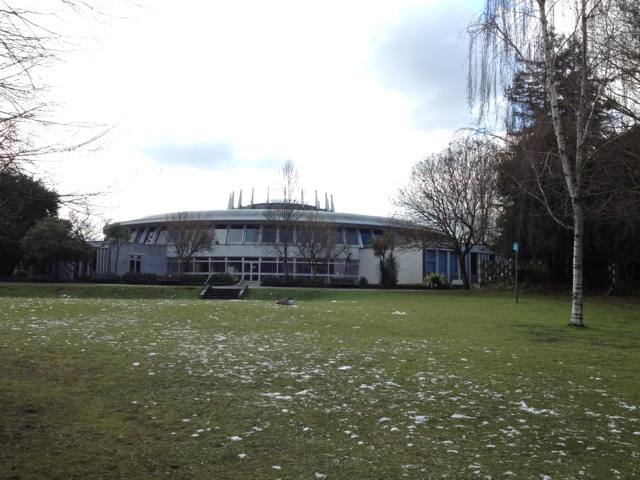
125 cyclists stopped over in Brighton on Sunday evening. They arrived late afternoon at my church, Brighthelm, where there was a reception for them, a meal and overnight accommodation.

Most were cycling from London to Paris, to arrive there at the end of the COP21 climate summit. Like the other pilgrims (see my last post, “Paris”, to which this one is pretty much a supplement), they are inspirational in their commitment to demonstrating their support for a good deal from this summit for the climate and for the world’s poor, and in acting a better world into being.
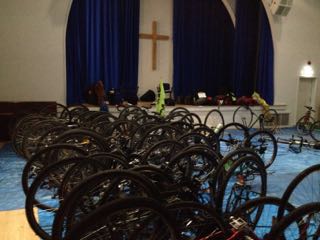
Bikehelm
100 bicycles tucked up in bed


I asked one young man if he’d cycled from London. “Sort of,” he said. He’d been studying this last term in London, but comes from Seattle. “But you didn’t cycle from Seattle, ha ha,” I joked. “Actually, I did,” he replied. He had cycled from Seattle to New York, then travelled by ship to Southampton. I was seriously impressed, not only by his epic journey but by his story of the kindness and hospitality he had received from strangers as he made his way across the States. People can be amazing.

One of the resources that was essential for this man’s journey was time. Everything in our culture is fast. I complain when the broadband is slow – I say, “It’s like the old days of dial-up”, but before that I had to go to the library for information. I don’t have any more leisure time now, but I spend much more of it in front of a screen. The train from London to Birmingham takes just 80 minutes, but this isn’t fast enough for us and we are going to spend an awful lot of money to rip through some beautiful countryside to put in a high-speed line. Our hunger for more speed comes at a huge cost, financially and environmentally. If I want to travel halfway around the world, say from Seattle to London, why should I expect to be able to do it within a day? It’s a very long way and perhaps it should take a very long time. It’s only natural. We don’t need a third runway at Heathrow – take the bike instead. It’s a simple choice between spending time or saving it.

Spending the money and the oil buys speed and saves time. We have built a whole way of life around this approach and it seems to have many benefits. But we are realizing that debt and climate change are high prices to pay. It may be, too, that we lose on the one hand at least as much as we gain on the other. Spending the time buys … a new world: scenery that you’re travelling slowly enough to take in; encounters with people whose simple hospitality forms new friendships; space to think deeply and encounter yourself; a sense of place in the wide world; a sense of achievement at making a journey fuelled by the burning of glucose in your cells.

These cyclists and pilgrims show that an alternative approach is possible. They make it possible. They make it happen. Every step, every turn of the chainwheel, is a choice to think differently, to spend time and save this beautiful planet and its inhabitants.


Paris

It was a humbling experience to be in Paris last weekend when pilgrims arrived from all over the world. I had walked with the UK ‘Pilgrimage2Paris’ group for a day, between Burgess Hill and Brighton, and saw them off along the south coast the next morning. It was great to see them again at the completion of their journey. Other groups had walked from other parts of Europe. One group had come from Peru and Yeb Sano had led a walk from the Philippines via Rome. Some had cycled from the UK and one couple had cycled from Vietnam: 16,000km.

I was so pleased to meet Yeb Sano, who has been such an inspiration since he fasted at the Warsaw climate summit in 2013 following the devastation caused to his homeland by Typhoon Haiyan. We’ve fasted and prayed for the climate. We’ve stood in the sea and prayed for the climate and those already being affected by climate change. And some have walked and cycled for the climate, to be in Paris for this super-important UN summit. People can be amazing.

IMG_0022
UK pilgrims at the reception service in Paris, Friday 27th November

Sometimes I think you just have to get on with something. These are all ordinary people, just doing something because something has to be done. Fast. Pray. Walk. They are small gestures that may never be more than that, but may connect with others and build something significant. In any case, I think that small gestures, motivated by love and by dis-satisfaction with the alternatives, are easily aligned with the redemptive love of God and so tend to be transformed, and to transform, way beyond their own essence, like a seed springing to life.

All of these journeys demonstrate an alternative reality. At its most basic, this says that you can go from A to B using your own natural resources. You don’t need oil, just time. Each step, each turn of the pedals, moves you along the earth a little. The gradient rises and falls. The wind blows in your face and through the autumn grass. The rain falls and you get wet. There may not be a toilet or a shop. You are a pilgrim on the earth, connected to the land on which you travel – you don’t get that in a car or a train and definitely not in a plane. Then companions make the journey far richer, and perhaps make it possible at all. That all adds up to a powerful alternative reality.

One of the pilgrims told me that she wouldn’t have described herself as gregarious, but she had learned what a wonderful and beautiful thing it is to be in community with others. After two weeks in close company, when one of the beds on offer in their lodging in Paris was in a room on its own, no one wanted to take it.

This demonstrates one way in which a gesture can be transformed into a larger reality. This person’s choice to be part of the pilgrimage transformed her desires, through experiencing a depth of comradeship that she would otherwise have avoided, but now really values. I have found something similar through my year’s fast from meat. As a meat lover, I have sometimes craved it, but I find that now that I have ended the fast, my desire for it has almost disappeared. (That is why freedom comes through discipline rather than through licence, I think). Eating less meat and, to a much greater extent, deeper communal bonds are features of a life with lower adverse ecological impact. It may even be a life that puts more in than it extracts.

Mary Grey (e.g. Sacred Longings, SCM, 2002) and others have argued that we are motivated and shaped by our desires. The negative, reductionist campaigning that can typify the environmental movement, ignores this to the peril of us all. We need our desires to be transformed so that what we long for inspires us to a better world. We need to be able to articulate those desires so that we can identify them, communicate them with others and so that they can be continually reformed.

IMG_0476
Place de la Republique, Paris: Memorials to those killed in the Friday 13th shootings

The very recent history of Paris puts two alternative visions into stark contrast. A wounded, grieving, frightened and angry city, following the terrorist shootings on 13th November, could easily lead the world along a road of security through the barrel of a gun, and there were lots of guns on show in Paris last weekend in the hands of lots of police and soldiers. We easily slip into this narrative, which George Orwell summed up in one of the slogans of Oceania in Nineteen Eighty-Four as “War is Peace”. It’s a narrative of self-defence and justifies the division, the hoarding of wealth and the utilitarian view of resources that brings us to war and ecological catastrophe. To borrow from Jesus’ parable, it’s an easy, wide, obvious road – a road you go down by default, with the flow.

On the other hand, the pilgrimages, the demonstrations all over the world on Sunday, the fasting and the praying and all the other ways in which people have shown support for a good deal from this UN climate summit, all point to an alternative. It is less obvious. It looks harder going, rocky, narrow and steep. You have to make a deliberate choice to travel it. People will think you’re stupid: standing in water – what’s that going to achieve? Well, if you’re priests carrying the Ark of God in the days of Joshua, it will open a way into the Promised Land, but you have to get your feet wet before the waters part.

The pilgrims got their feet wet. They have been changed through their experiences of the journeys they have made: the distances, the landscapes, the comradeship, the hospitality of strangers. In the deeper connections they have forged on the journeys they have chosen, the larger journey to the Promised Land is already underway.


Along life’s cycle-path, remember to stop and smell the sea

My daily ride to work has to be one of the best, if not the best commuter routes in the world.

IMG_0309

The sea looks different every time.  Even on dull, damp, autumn mornings, it’s something worth looking at.

DSCN0181

It’s so easy to rush by it.  I may be late for an appointment.  There’s stuff to do in the office.  It’s raining.

I am trying to establish a new habit – to stop for a minute and watch the waves and breathe in the salty air and smell the seaweed.  It seems somehow disrespectful to rush by something so utterly beautiful and wild.  The emails won’t go bad and I’m already wet. I can stop for a minute – in fact, perhaps I don’t have time not to pay attention to the sea and there be some point in being alive.


Multiplication

Light-bulbs are boring. Carbon emissions are boring. Reducing your footprint is a worthy aspiration, but it’s reductive, it closes down and diminishes. It’s putting the cart before the horse.

Carts are boring. You can jazz them up, but it’s still a cart. The interesting bit is the horse at the front – that living being who can look you in the eye, who needs feeding and grooming and who might return a pat on the neck with a friendly nuzzle. Life is interesting. Tools are tools.

In the bible, in Genesis 1, there are two charges from God to creation. The first is in verse 22, at the end of the fifth day, when God blesses the fish and the birds and tells them to “Be fruitful and multiply and fill the waters in the seas, and let birds multiply on the earth.” The second is verse 28, spoken to humans: “Be fruitful and multiply, and fill the earth and subdue it …” OK, the charge to subdue and have dominion is problematic, although some argue it depends how you interpret it. What I want to reflect on is the charge to humans, birds and fish to “Be fruitful and multiply.”

There is a similar two-fold charge after the flood. In Genesis 8.17, Noah is told to bring out of the ark every living thing – “birds and animals and every creeping thing” – “so that they may abound on the earth and be fruitful and multiply on the earth.” A few verses later, (9.1) the same blessing is given to Noah and his family – to “Be fruitful and multiply and fill the earth.”

What do you think? Have these verses been over-fulfilled by humans and it’s time to stop multiplying and scale back? Could be. Certainly, we cannot continue with a way of life that would require more than three planet Earths when we only have one. The danger of multiplication is that it leads to more and there is an urgent need for us to stop at ‘enough’.

But I want to go back to my horse and the thought that life is good. Just as environmentally-concerned Christians have morphed Genesis 1’s fearsome concept of ‘dominion’ into the gentler ‘stewardship’, I think we may be able to find a way of being fruitful and multiplying that will lead to life that is flourishing, abundant and life-giving – for all.

Here I am going to borrow from Naomi Klein (in This Changes Everything) and her contrast of two mindsets – extractive versus regenerative. An extractive mindset is what’s been governing human behaviour for centuries. We take for ourselves what we want – coal, oil, timber, ore, food, water, whatever. Our focus is on what we want, and we apply our ingenuity to solving the problem of extracting as much stuff as we want. We are just starting to realize that we need to apply some ingenuity to the problem of what we do with the waste, because there’s too much of it. To an extractive world-view, multiplication is simply about having more. We will grow the economy, multiply the value of our property, have more stuff.

An extractive approach to the problem of excessive waste (including pollution) is to find ways of extracting less, mainly through becoming more efficient. We expect to maintain our way of life – keep the lights on, for example – while using less energy and other resources. It sounds worthy but it remains, at its core, extractive. It takes. Taking less is reductive and it’s still taking. And it’s like a boring cart. May as well make it a car (but a very efficient one), then there’s no need for that horse – because at the end of the day, there’s no need for life in an extractive world.

A regenerative approach would be more immersed and participative. It would be very mindful of what is put back into the natural system. We have to take – we have to eat and heat and so on. The question is, how do we give back and replenish, so that regeneration – new life – can happen? In a regenerative society, multiplication would mean putting more in than was taken out. A guiding principle would be that if you can’t add more back in, you can’t take anything out. We would live in order to multiply life.

In a regenerative world, we would pay attention to the relationships within systems. People more interested in giving than taking would naturally build strong and joyful communities. They would apply their ingenuity to inventing ways of growing food, travelling, acquiring and using energy, and so on, that multiplied life rather than diminished it. As more is put in than taken out, carbon emissions would go into reverse. But the focus would be on life, not on stuff. The focus would be on life that is abundant and flourishing, for all, including horses.


Starlings

These past two days, starlings have been gathering in the little oak tree in our garden.  Individually, they’re not very attractive birds.  They often look scruffy and they sound terrible – and they make a lot of sound.

But when they soar and wheel in a murmuration out to sea at dusk, there is little in this world that lifts the heart quite like it.  Thousands of birds acting as one giant, fluid flight.  It is breath-takingly beautiful.  People stop and watch in wonder and (dare I say?) worship.

Starlings


(It’s not my photo, by the way – at the moment the starlings are making a noise and a mess in my garden)


Front Gardening

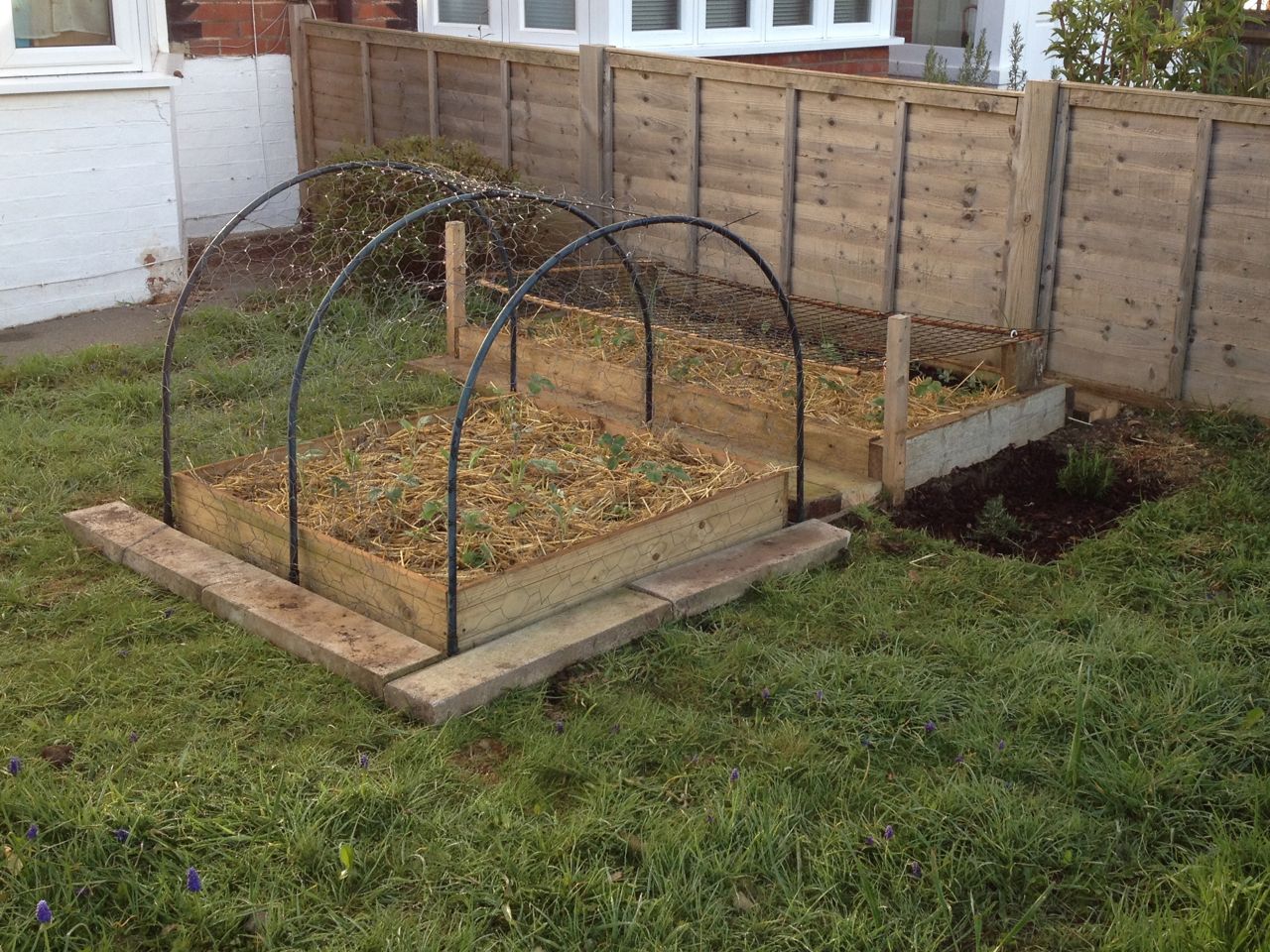
This is only the second front garden I’ve had.  In the last house, the back was so large I just kept the front as lawn.  Here, though, the back is small and quite shaded; also I want to leave enough space out there so that the tent can be put up to dry if we have to bring it home wet.  So I’ve decided to put some vegetable beds in the front garden instead.  Here’s a photo of progress so far:

Front veg beds

The frames are old ones we brought with us, the rear one being made of old floor joists.  I’m a fan of ‘no dig’ gardening, on the basis that the soil is a living complex of fungi and other important beings that are better left undisturbed … plus it’s less work.  So I put down a layer of cardboard to cover the grass, then added the compost and some manure.  Then the seedlings went in: sugar snap peas, lettuce, spinach, broccoli, cauliflower and strawberries.  A surface mulch of straw should help with moisture retention.  In front I’ve planted a couple of rosemary bushes and some dwarf sunflower seeds.

The first night, a fox (probably) dug everything up.  I was really annoyed.  I thought, “What makes the fox think she can just dig where she likes?”  Then I thought, “What makes me think I can just install raised beds where I like?”  Still – I’ve put a sheet of wire mesh across the rear bed, about 6 inches above the soil.  The front bed frame was a kit and had a kind of square poly-tunnel over it. The plastic rotted but I’ve used the frame and covered it with chicken wire.  So far, that’s kept the animals away and the re-planted seedlings seem to be recovering.

One bonus of gardening in front of the house is that, while I was working, I had loads of short conversations with passers-by.  It seems that vegetables make people happy.

Meat Is Murder III

My daughter and I have been abstaining from the flesh of dead animals since Christmas.  For me, it’s at least my third attempt to be vegetarian, but it feels more serious this time.

Here are my reasons:

– Eating meat or fish requires an act of violence to be carried out against a living being.  That just seems wrong.  I am increasingly convinced that hope for the world lies in the formation of a community of all creatures.  The cow is my sister.  I shouldn’t eat my sister, should I?

– Modern farming is too intensive and too many animals suffer as a result.  Pigs shouldn’t be kept in sheds or behind bars.  They should be in the woods, rooting around in the leaf mould.

– The amount of meat we eat in the west is unsustainable.  It uses too much land, produces too much waste (not least methane), and is an extraordinarily inefficient way of converting plant protein into Mabbsonsea protein.

One problem with being vegetarian is that there’s very little choice when eating out, and so I eat far too much cheese.  My objection to intensive farming applies very much to dairy farming, where sometimes cows are bred and made to produce so much milk in their first few years that they’re all milked out and go into cheap pies.  The natural lifespan for the cow is somewhere in the region of 20 years.  As I’m hypocalcaemic (thank you, thyroid cancer) I need to drink/eat dairy for the calcium, so I’m making an extra effort to buy organic, as that’s about the best welfare standard for the cows.  But that still leaves the issues of land use, waste and emissions.

There are no cost-free easy answers to all this.  There’s a price to be paid for me to be alive.  An upside of a vegetarian diet is that it is making me think much more carefully about food, and I hope that becoming more caring and thoughtful might bring my price down.

Home is where the fridge is

Today I went to the funeral of a minister who had been a great support to me early in my ordained ministry.  It was a good, faith-filled celebration of the life of a remarkable man, for whom I’m very thankful.  He had been a frequent visiting preacher at my church in Battersea, which I left in 2006, and there were quite a few people present from that church.  I haven’t seen them for years and it was great meeting up with these old friends (none of whom looked any older, I’m annoyed to say) whilst we gathered to say goodbye to an old friend.

The service was in the village where I grew up.   I caught an earlier train than I needed, so that I could have a nostalgic hour wandering around.  Ewell is an odd place.  Most of it is 1930s housing estates, but the village itself is very historic, being a stopping place on the Romans’ Stane Street.  There are good examples of timber-clad Surrey houses, two former gunpowder mills and this old “Watch House”:

Ewell watch house

As a small boy I liked to be lifted up to look in through the spooky bars into the prison cell.  I did a project on it for a Cub Scout badge.  The door on the right accessed the hand-pumped fire engine.  That is now in the museum, housed in this highly unusual 1960s building, Bourne Hall:

Bourne Hall

We used to go to the library there, and often visit the local history museum upstairs too.  I was pleased to see that the fire engine and Lord Roseberry’s Hansom Cab and some other familiar objects are still there. I enjoyed my afternoon reviving memories …

… and then coming home.

I’ve been surprised how quickly I’ve felt at home in our new house.  If I think about home, home is this house.  Home is not where I grew up, it’s not where my parents live, it’s not anywhere else I’ve lived.  It’s here, where the fridge is.


Here’s a link to a clip of The Boxcars playing their song, “I went back to my old home today” in a back-stage toilet in Tennessee.   (There’s a risk of getting in a muddle, because for me today was more about places and friends, not, as in the song, my parents, even though they’re a big feature in my childhood memories.  I’m glad to say they’re alive and well & it wasn’t time so much as a removal truck that took them away from Ewell.  Anyway, the song still feels appropriate)

Blank sheet garden

This is our new back garden:

Braemore garden

It’s a bit of a dump, isn’t it?  The builders have trodden a lot of the grass into the soil, which seems to be a heavy clay, heavily compacted, very muddy.  If you’ve seen my previous gardening posts, (e.g. Garden, from 2012) you’ll see that this new garden is a fraction of the size of the old one, and really quite boring.

It’s actually quite exciting.  It’s like a blank sheet of paper.  I have ideas and dreams, and because it’s much smaller, I might manage to realise them here.  I’m thinking … wildflowers and veggies … a small pond for amphibians and maybe fish (maybe it will help drain the soil?) … an apple tree trained up the south-facing fence … a hedge of hawthorn, hazel & maybe holly to mask the compost bins and feed the birds …  the possibilities are endless in a blank sheet garden.

Except it’s not exactly blank.  That’s some sort of oak tree, there at the back, and something’s been living in that compost bin.  There’s a laurel bush and some sort of evergreen, broad-leafed tree and a magnificent yucca-type thing, and who knows what’s dormant in the soil, waiting for spring, amongst all the chilled invertebrates? I’m not too hopeful about garden birds, being about 100 yards from the sea, but I’ve already seen a robin and some blackbirds.  It’s not blank – it’s full of life.  And, just like the old garden, or any piece of land I might inhabit, it’s not mine.

Farewell garden, and I thank you

The long-running saga of our house move is drawing towards a conclusion. It looks likely that we’ll be moving just before Christmas (not very good timing for a minister, but there you go).

I have completed my checklist of gardening tasks, and can now report that the garden is ready for the move. I have:
– dismantled and sold the trampoline
– dismantled the swing seat
– drained and disconnected the water butts
– dismantled my hermitage in the shed and tidied the shed
– emptied a compost bin and put it out for the rain to wash, along with another that was already empty
– weaned the birds off their reliance on me and dismantled the feeders
– taken up the frames of two of the raised beds (the other has been empty all year – in the Spring we thought we’d be moving in July, so I haven’t grown any veg this year)
– pruned everything that should be pruned at this time of year, except for 2 rose bushes who’ve been fooled by the mild November and are still in bloom
– pulled ivy off the fences

I nearly didn’t do the ivy. Normally that’s a mid-winter job, when there isn’t so much else to do. But I expect my old churches will rent the house out, and it’s not the sort of job a tenant is likely to do, and the ivy wrecks the fences. The neighbours on both sides of the garden are very fond of ivy and it grows like mad in these shady, mature gardens.

Clearing ivy was the first job I ever did in this garden. At the time, we were living in temporary accommodation 10 miles the far side of the city from our churches and schools, and it was truly dreadful. We had been there 4 months and while some work had been done to this house over the autumn, weeks went by with nothing happening at all. We were desperate to move. In January, I thought, ‘Someone needs to be working on that house.’ So I came in on my days off and pulled up ivy. It had spread across half the garden and up all the trees and I spent several days just reeling in armfuls of the stuff. So it felt quite fitting this weekend that my last task in the garden was the same as my first.

I will miss this garden. It’s been a place of learning, of wonder, of restoration, of healing, of prayer, of fun, of food (grown and eaten), of company and of solitude. Our new garden will be very different, and no doubt I will tell you all about it in due course. But for now, farewell garden, and I thank you.