A conversation over breakfast at a church weekend turned to electric vehicles. I made the point that I do these days, that if we simply replace current vehicle use with electric vehicles, we’ll have to burn a lot of fossil fuels to provide that much electricity and so electric vehicles may not make much difference to the bigger climate change picture. So we moved on to how different expectations of how we use transport could make the difference.
Someone mentioned that in the early days of Fidel Castro in Cuba and the US trade embargo, the cars they had were seen as belonging to the nation. If you were driving and someone hailed you, you were expected to pull over and drive them where they wanted to go. It wasn’t your car, it was our car. That’s one thought: sharing resources as things we hold in common for the common good.
 Another thought we discussed is how technology might enable more sharing. By the end of this year, the UK government intends to have trialled ‘platooning’ three semi-autonomous trucks together, driven by just one driver in the lead truck. Similar trials have taken place in the US and on continental Europe. Driverless vehicles platooned like this can drive safely very close together, potentially hugely increasing the capacity of existing roads and thereby avoiding the environmental destruction caused by building new roads. Couple up driverless technology to planning and logistics systems overseeing the needs of business – where and when the goods in the trucks need to be – and road haulage could be even more fuel-efficient. That could be linked up to weather forecasting systems so that the logistics could be planned around the likely availability of renewable energy.
Something similar could be put into place with cars and the transport of people. A ride-hailing app could be linked up to the availability of transport. So if I want to go from my house to town in 15 minutes time, I just tap that into my phone and the system would tell me the best option, whether a bus or a car share with someone driving that way anyway, and hook me up with the driver. Or it could tell me that the pool car parked nearby is available for me, and on my way I could pick up a neighbour or two. With driverless technology, the pool car could pick us all up, drop us off and either park or pick up other people and later another vehicle would take me home. The same app could tell me that I can’t go in 15 minutes time, but 10 or 20 are possible. With longer journeys, platooning could provide the same energy and planning efficiencies as with freight transport.
This was just a breakfast conversation, pooling as much ignorance as knowledge and enthusiasm. The technology may or may not help us, and in any case the gate-keeper on the road to lower-impact transport is our attitude. The choice to hold resources in common for the common good entails sacrificing the comfort and convenience we’ve gotten used to, for example driving my car where I want and when I want, without needing to consider the needs and wants of anyone else.
It did make me think, though, that so much of my environmental campaigning has focussed on individual action: changes I can make to my energy use and my other consumer choices, and the collective angle is no more than the combination of many individual actions. What if more consideration were given to the social dimension of climate action, giving primary attention to how we interact with each other? Building a stronger sense of belonging together in community may enable greater reductions in human impact on the environment than if we go it alone, and becoming less isolated may make us happier, too. In the society that emerges after the collapse of this one, the whole will be greater than the sum of its parts and we will have learned that a good life is only possible through a choice to serve the common good.
Imagine you’re sitting at that breakfast table. What would you say? What do you think?


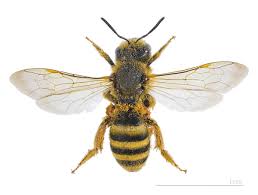 November 30th is Remembrance Day for Lost Species. This evening, once again in Brighton, as in many other places around the world, there will be a procession and ritual to mourn the loss of animals and plants that have become extinct. We are in the 6th Mass Extinction Event in the Earth’s history and it is a tragedy for all life on Earth.
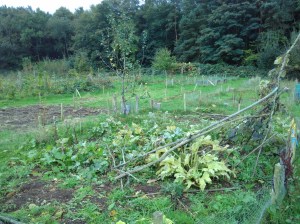 This particular bed has been used for beans and courgettes this year, and has an apple tree at one edge. I loved the way Ben talked about putting in plants “that want to be near that tree,” meaning things like comfrey and dandelions that will attract good pollinators for the tree. The idea is to listen to the land and put plants together that not just work together but that like being together. Another principle is to listen to the people who are involved and, rather than presenting them with a long list of jobs, let them do the things around the farm that they find life-giving. It’s a model of land, plants, animals and people flourishing together. I guess that, in the big picture, the jobs that really need doing will be the jobs that, between them, the people want to do, and the work will get done. The farm might even be more productive – and certainly will be in the big picture.
 I’ve been attracted to permaculture for several years and have tried a few practices in my garden. I love this idea of listening to the land, learning from it and working with it. Layer mulching has worked pretty well for me (layers of cardboard, compost and manure), and not disturbing the soil structure by digging works very well for me. I’ve loads to learn, though – e.g. about how different plants work together – but I think it’s a great idea.
 There’s a new article in the Bible Studies section! Do I get an Hallelujah? It’s about the Parable of the Talents and takes a look at money, fossil-fuel investment and the end of the world. No wonder none of the characters in the story look happy.
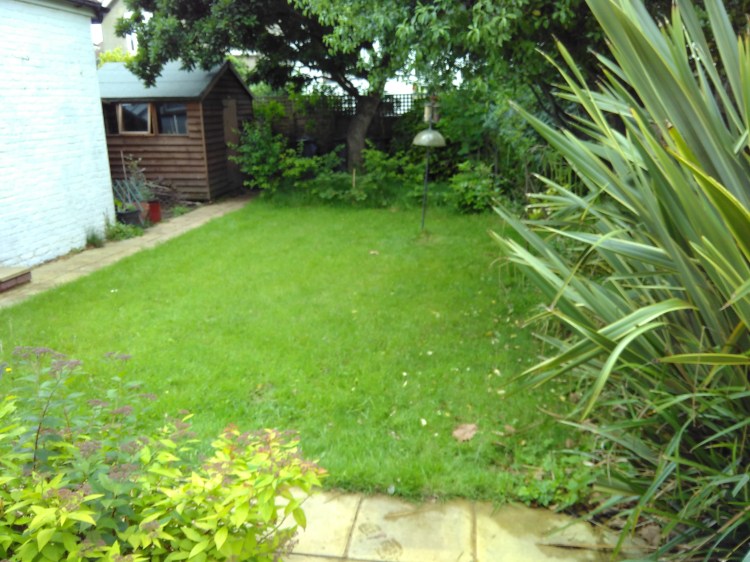
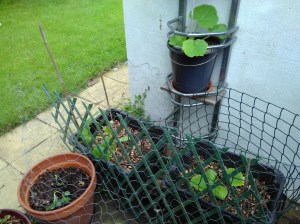
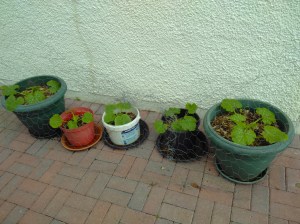
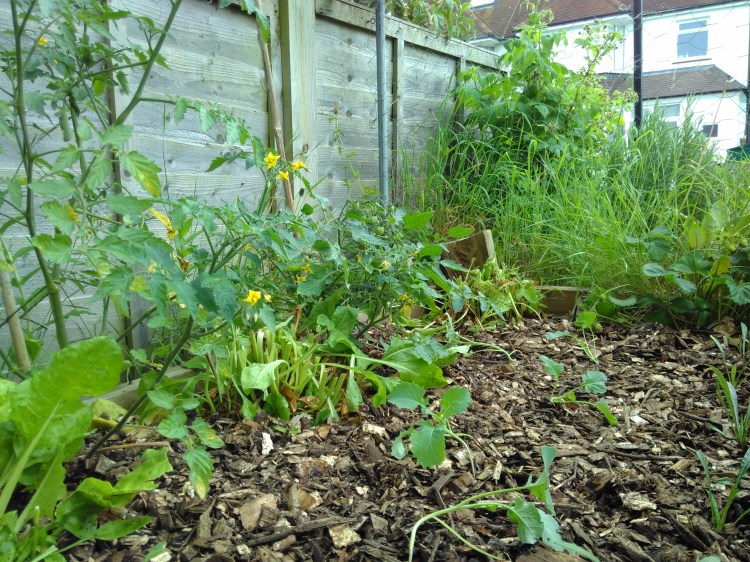


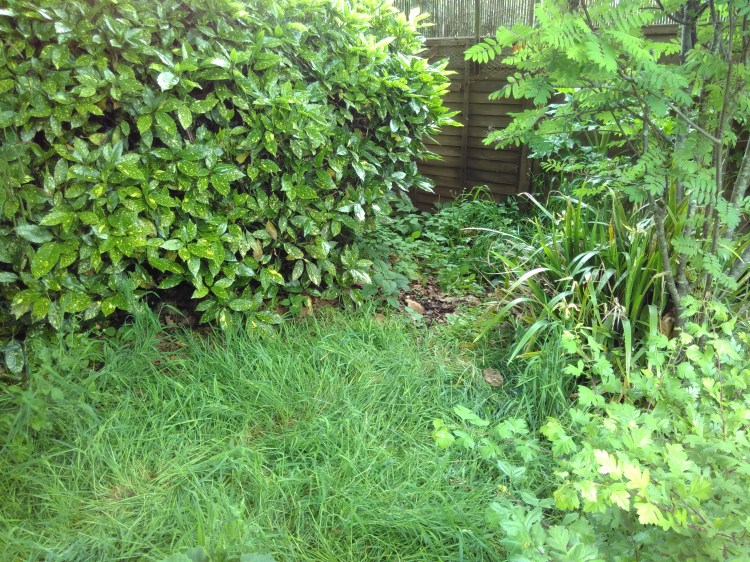
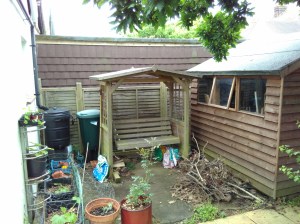 o I can sit there even when it’s raining. It has a great view (see below: oak, hawthorn, hazel, rowan, hydrangea, laurel, camelia, budleia, apple, pittosporum and next door’s silver birch, as well as grass I let grow tall, as grass should), and it’s tucked away from sight. I bring a coffee out here early every morning and have a little time thinking, praying and watching the birds on the feeder. It’s my favourite place at other times, too, for reading or just sitting. Because what’s the point of a garden if you don’t sit and do nothing except enjoy it?
 This picture shows the time, in October 2015, when we were joined by Maina Taila from Tuvalu and Rev. Maleta Tenten from Kiribati. This was especially poignant, as the Pacific islands had been a particular focus for us, as they are so vulnerable to the rising sea. Also in this picture are a couple who were just walking along the beach, saw our banner and joined in.
 Alex Mabbs