Europe’s Rainforest: a theological response

In one of the spurious endings to Mark’s gospel, Jesus says to his disciples, “Go into all the world and proclaim the good news to the whole creation.” (Mark 16.15). It’s not in the oldest manuscripts, but I think it echoes the way Mark tells the temptation story at the beginning of the gospel. There, in just one verse (1.13) Mark tells us that Jesus’ companions in the wilderness were Satan, angels, and wild beasts. Jesus is good news for the animals and for the whole creation. Maybe in the wilderness Jesus was modelling Isaiah’s vision of the peaceable rule of God (Isaiah 11.1-9) that would be fulfilled through him.

In my work with churches, I try to focus on positive stories from the Bible that will motivate and inspire people. I don’t think many people are persuaded to change by graphs and numbers, and fear tends to be more disabling than motivating. So I talk about Abraham being called to be a blessing (Genesis 12.3), a promise echoed to his grandson, Jacob (Genesis 28.14), and the calling on Israel in the days of Moses to be a priestly nation (Exodus 19.6): this emphasis on God calling people to serve the rest of the world in order to bless all. Jesus took a servant’s role too (e.g. Matthew 20.28, John 13.1-15). Then Paul in Romans 8 writes about creation being set free from its ‘bondage to decay’ as part of the great move of liberation that includes the liberation of ‘the children of God’ (Romans 8.18-23). His vision is one of a new creation, not just a few humans being given some sort of blessed afterlife; an inclusive, cosmic vision, stated again in Colossians 1.15-20. It seems to me that, while that longer ending of Mark’s gospel is likely to be a later addition and so of doubtful authority, it’s nevertheless true: the commission of Jesus to his followers is to express good news to the whole creation.

It seems to me that this is a fundamental idea for Christian action on the environment. We are part of creation, not separate from it, and we are here to serve and to be a blessing.

I think this takes environmental action to a whole new level. The challenge is more than simply doing less harm. It is to be good news. That’s why I’m writing this as a theological response to my last blog post, where I wrote about the abundance and diversity of chalk grassland being the result of careful human intervention.

Perhaps the argument that humans should intervene as little as possible in nature forces the same divide between humans and majority-nature as the argument that humans are somehow privileged and of a different order of being, as seen in the folk-religion that claims only humans have souls, and in the wide-spread sense of entitlement to extract, commodify and destroy nature to serve human wants. The truth is (and we really need this truth) that humans are one species among all the others. We are nature – interconnected, interdependent, part of the web of all things. Theologically, we are created beings, creatures of the earth, formed of the same dust of earth as the animals, animated with the same breath of God (e.g. Genesis 2.7, 19; Psalm 104.30). Historically, humans have been a feature of the British landscape for nearly a million years, and Homo sapiens came north with the plants, the trees, and the other mammals as the last ice age retreated. We are nature: inextricably part of the living world.

It would be irresponsible of us to claim a division and try to retreat from nature – irresponsible and a denial of our nature. The key is that idea of being good news. Chalk grassland, heathland, well-managed woodland, all point to the way that human interaction in nature can be beneficial to many – it can be good news. Of course there is a huge challenge before us to reduce our enormously harmful impact on the living world. But alongside that there is an equally huge challenge to be regenerative, to serve and bless, to be good news to the whole creation.
Europe’s Rainforest

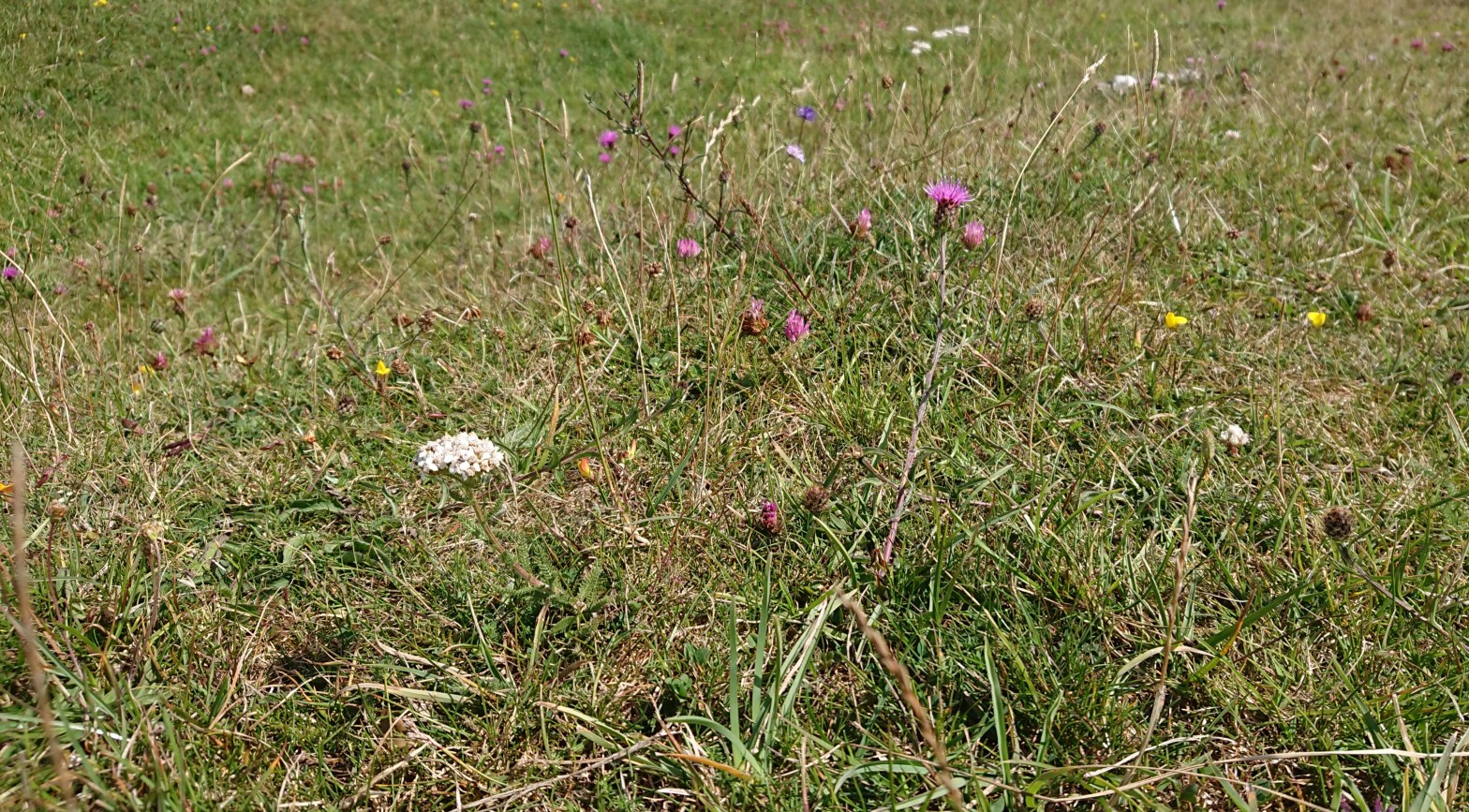
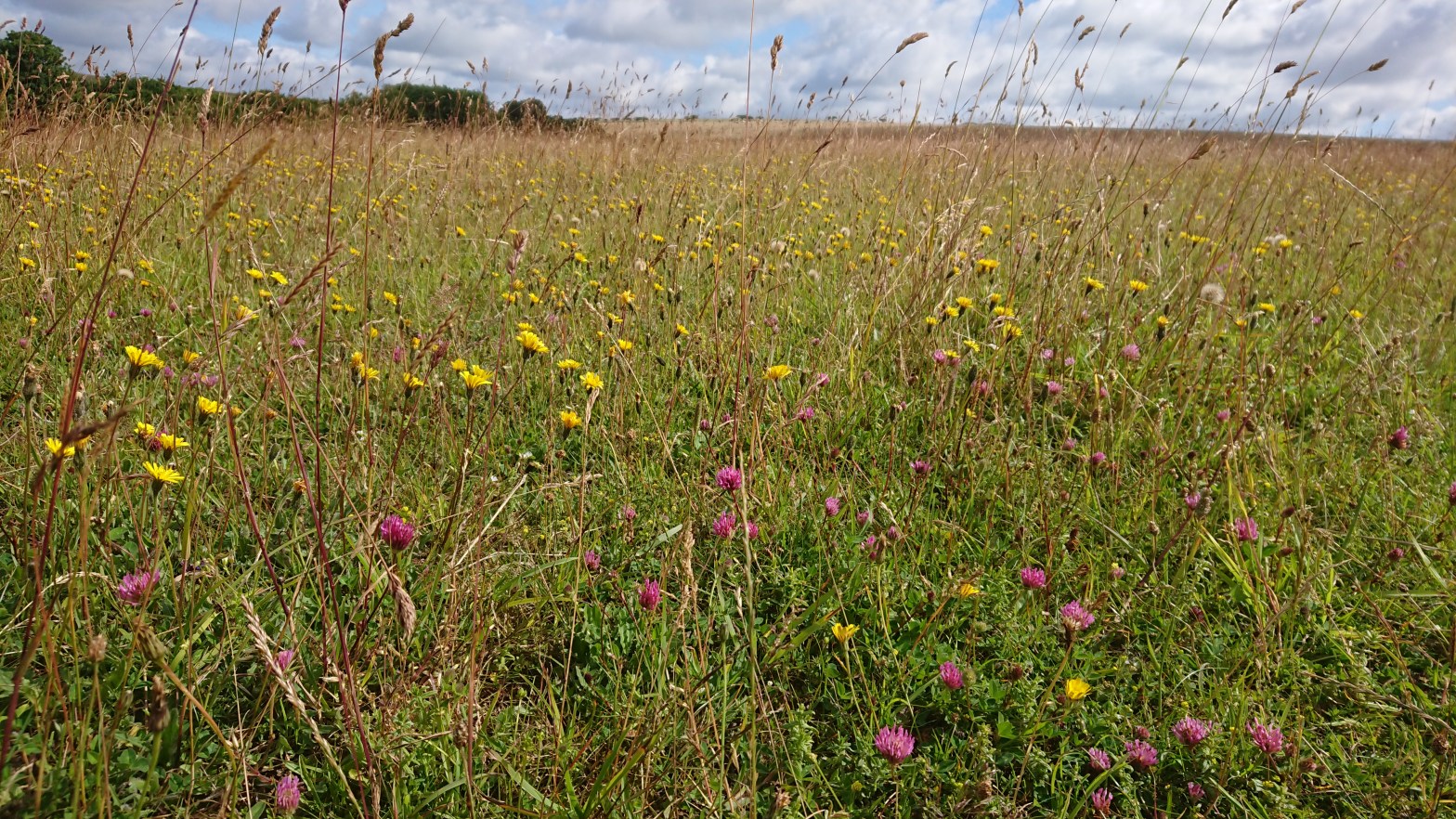
Chalk grassland is an enormously rich habitat. It’s so biodiverse and yet so fragile, that the late naturalist David Bellamy called it “Europe’s rainforest”. There are some beautiful examples of it on the South Downs, especially at this time of year with so many plants in flower.

It’s not a natural habitat. It’s the result of thousands of years of careful management. The secret is grazing. The right density of sheep and cattle, grazed in the right rotation pattern, keeps the grass at the right height for other plants to flourish. With a flourishing variety of plants comes a flourishing variety of insects and other invertebrate life. With those comes a flourishing bird population. The animal dung enriches the otherwise poor soil. Too many heads of livestock and you end up with short-cropped grass and little else. Too few, or none, and the grassland would turn to scrub and eventually to woodland. That might not necessarily be a bad thing in itself, but the species that thrive on the chalk downs would be lost.

It seems to me that this grassland environment is a good example of the kind of co-operation between humans and majority-nature that leads to the flourishing of life: how humans can shape the world for the good of many, with more biodiversity as a result than there would be without human intervention.

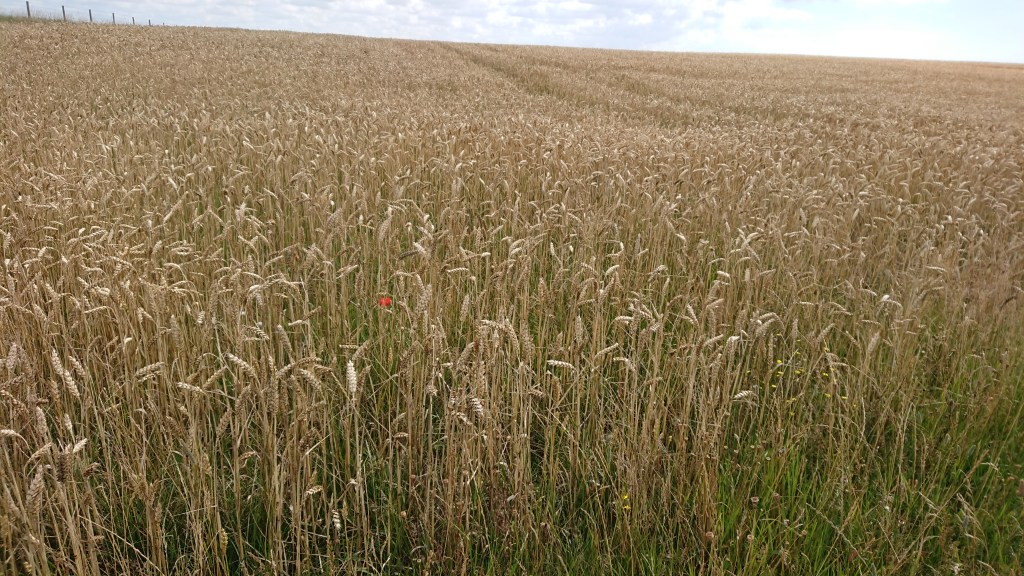
But all over the Downs is evidence of human intervention that is less positive. Only 4% of the surface area of the South Downs National Park is grassland. Much of the open land is under the plough, with great fields of wheat and other cereals standing in what looks like dry flinty clay. There are also fields of vegetables, and more intensive pasture. The most rapid loss of grassland to the plough happened during the second world war, and that illustrates the dilemma. We have to eat. Can we afford to be sentimental about wild flowers and butterflies when we need farmers to provide us with food – and at a time when the new isolationist politics in Britain are likely to make home-grown food much more important? At the same time, there is environmental pressure to eat less meat, especially lamb and beef: the very meat that makes any economic sense at all of conservation grazing on the Downs.

There are two arguments here to which I’m sympathetic:

  1. Land shouldn’t need to be economic. The commons should be restored. In particular, the land that is now in the hands of large estates as a result of enclosure processes should be returned to the people. The trouble is, what would the people do with it? Most enclosure happened hundreds of years ago, since when most of the population has become urban and detached from the land. Personally, I wouldn’t have a clue.
  2. Nature should be allowed to take its course, with no human interference. Why should humans get to decide the fate of other species, or determine which particular snapshot of history gets conserved? I love the idea of this, but I suspect it’s somewhat romantic. For example, woodland benefits from being managed: coppicing increases the lifespan of trees and increases biodiversity by allowing more light through. The amazing wilding project at the Knepp Estate in West Sussex also shows the value of careful management. While their approach is one of minimal intervention, they do intervene, for example in controlling the sizes of populations of the large mammals (deer, cattle, ponies and pigs) whose introduction, with the different ways they graze, browse and disturb the soil, has been largely responsible for the incredible resurgence of biodiversity there.

Perhaps a bigger picture needs to come into play. This is not just about land use, it’s about economics and the structure of society. What if we took our networks of food production and radically localised them? There’s no obvious reason why, in my supermarket right now, loose onions come from Suffolk while the bagged onions right next to them come from Egypt. Come to that, there’s no good reason why I’m even looking at onions in a supermarket. If the food chain were shortened as much as possible, it would help those of us in towns to develop more awareness of farming: what’s in season, where it’s grown, how it’s grown, and so on. I would like to buy less of my food from huge food corporations, with their ridiculously far-flung sourcing, their over-processing and over-packaging, and their economic strangle-hold on farmers and sellers. Sure, in my busy urban lifestyle, I can (in theory) seek out farmers markets and so on, but if local food is going to catch on it needs to be much easier to buy – for everyone.

Localise and simplify the whole thing. The answer to methane emissions from the dairy and meat industries is not to replace industrialised meat and dairy with industrialised plant-based products made from God-knows-what transported from God-knows-where and wrapped in plastic. The answer is not to have meat and dairy industries. In fact, the answer is not to have industrialised food. Instead, if I could be assured that the milk or cheese came from a small farm just over the hills, and that the lamb I occasionally ate as a rare treat came from sheep grazed responsibly on chalk grassland, there would be many benefits. There would be more wildlife in the countryside, not least on the Downs. The money would stay local rather than propping up Unilever or whoever. I suspect my carbon emissions would be lower. I’m not sure how we move from our present industrialised food supply to one that is local, but I do think that food supply is only one aspect of the economy that needs to be re-distributed more locally if we want a flourishing and humane society.

This is starting to feel rather technical and argumentative, especially as just the mention of food ethics is enough to raise hackles and cause deeply held opinions to be fired from trench to trench. I want to go back to the meadow on the downs, sit on the grass among the flowers and listen to the thrum of insects and the singing of skylarks. This diverse abundance seems to me to speak of harmony and co-operation. Even if those Neolithic ancestors who started grazing sheep and cattle on the Sussex hills weren’t doing so to provide a habitat for the Adonis blue butterfly, we can do so. We know enough about the complexity and interconnectedness of ecosystems to be able to manage the land for the benefit of all life, not just to do less harm but in such a way as to promote greater abundance in the big picture. It’s a choice. Perhaps the vulnerability of habitats like chalk grassland and the endangered status of so many wild species across all habitats might help us value them more, perhaps even to the extent that we are able to weigh them sensibly in the balance against money. Surely it must be possible to live with nature in such a way that the abundance of life is enhanced, with ample habitat (including food) for all?

These thoughts started life as one of my two-minute sermons. You can watch it here:
https://youtu.be/LaQcKviZNqU

Spirituality in an Ecological Crisis

It’s not enough to know we’re in an ecological crisis. You have to feel it. It’s a question of the story you tell yourself about who you are. It’s a question of meaning and of spirituality – a question of being who you are in relation to all the life (human and otherwise) that is.

I’m increasingly convinced of this. I can change some aspects of my behaviour and reduce the amount of harm I do, and that’s good. But something deeper has to happen if I am going to be part of shaping a world where all life flourishes. That story I tell myself about who I am needs to develop so that I change from the core of my being outwards. For me, I am finding that is happening as I pay attention to nature, as I work on a practice of nature-focused outdoor prayer/meditation, and learn to read the bible through a ‘greener’/majority-nature lens. Little by little, I feel a deepening connection with the living world beyond myself.

All that is by way of introducing my latest piece of work: Creation Psalms.

It’s a series of resources based on seven psalms that address issues to do with nature and humanity. In each one, there are questions to prompt reflection on the text, some suggestions for prayer, outdoors and indoors, some written prayers and poems, and my own reflection on the psalm.

This may ring a faint bell if you’ve been following my blog for some time. In 2016, I had some sabbatical leave and spent it exploring a spirituality of nature connection. The resulting written work was a set of essays on these seven psalms. Those essays form the core that I have now expanded into this new resource for individuals, groups and Churches wanting to explore bible-based spirituality for an ecological crisis.

The bible, being an ancient text, doesn’t address 450 parts-per-million carbon dioxide in the atmosphere, or oil-fuelled transportation and energy, or the way that growth-obsessed liberal capitalism ravages the planet. It does, however, often talk very positively about nature and it addresses the place of humans within nature. Its ethical code includes principles that respect and care for the land, that protect those who are vulnerable, and that should prevent exploitation, hoarding and inequality. It’s true that parts of the bible have been used to justify oppression, and that modern interpretations have tended to focus on an after-life, with a correlated devaluing of the present life (also used as a tool of oppression, as Karl Marx rightly said) and of the physical world. However, I find that there’s more than enough in this ancient anthology of spiritual texts that is affirming of life and promotes justice and compassionate living, that it still feels like a holy book to me, especially if remember to ask whose eyes am I reading it through, being alert to my own privilege and the culture of privilege in which I was raised.

The Psalms are the prayer book of the bible, so they’re a good place to go to resource prayer and reflection on who we are and how we live in relation to the living world beyond us. Themes that emerge in the psalms I’ve looked at include:

  • The completeness of creation – complete when we each participate (Psalm 145)
  • The wildness of God, against the harm done by a well-ordered bureaucratic system (Psalm 29)
  • Celebration of wildness on the earth, including wild animals – a big picture in which humanity is marginal (Psalm 104)
  • A critique of the word ‘dominion’ and the hubris and harm that result (Psalm 8)
  • The importance of a long and broad sense of belonging in community (Psalm 136)
  • Feeling at home in our bodies; not ghosts in machines but embodied beings (Psalm 139)
  • All the universe as able to worship God – a sense of the connectedness of all things, including the Divine (Psalm 148)

If this sounds like your thing, please do go to Creation Psalms and explore!

Active Hope

Hope is hard to come by. I imagine that’s a feeling I share with many others who care about climate, wildlife, extinction, and so on. That sense of despair always lurks in the background and it easily slips into the foreground if I don’t work hard enough to keep it at bay. Part of my problem is that I don’t really have faith in mantras like, “We still have time,” and “If we all do our bit…” and I really, really, don’t have faith in the UK government. I think this weird time of lockdown has made hope even harder for me to come by, as it feels so difficult to see how the pandemic will pan out and whether many of the ways of life that I have taken for granted will ever return.

Over the past year or two, I have run workshops that included a discernment tool based loosely on a mash up of the Ignatian Examen and the “Great Turning” spiral from Joanna Macy’s “Work That Reconnects”. Wallowing in lockdown in this sense of hopelessness, I thought it’s time I actually read something about the Work That Reconnects and so I read “Active Hope” by Joanna Macy and Chris Johnstone. The sub-title, “How to face the mess we’re in without going crazy”, sounded like just what I need, and it chimed with the rather more clumsy title of my workshop: “Taking action in a heating world without losing your cool.”

I found that many other things in this book resonated with me. I’ll just mention a few here, by way of personal reflection.

The spiral starts with Coming from Gratitude. I realise how much my life is transactional rather that grace-filled. For example, if I am pleased with something I have, whether a new coat or the meal in front of me, I paid for it with money that I earned. It doesn’t feel like a gift for which I naturally feel thankful. I am so far removed from the natural world that lies behind everything, where sunshine and rain, and cosmic and geological processes, provide a rich and regenerative world. By default I don’t think about where my stuff comes from and all the people, animals and plants involved in the chain from earth to plate or pocket. Even though I like to think of myself as a thoughtful person, an informed supporter of development charities, fair trade, organic farming and so on, my transactional life is far removed from the natural grace of the earth. I want to explore some habits that will build grace and gratefulness into my attitudes and strengthen my sense of connection with the natural world.

This leads into some of the aspects of “Seeing with new eyes”, the third station on the spiral, for example having a wider sense of self and a larger view of time. Macy and Johnstone write about widening circles of belonging, from family through community and the human race to the whole web of life. I find this helpful. I can’t always hold in my mind that big picture. It’s hard enough sometimes to belong in my wider family, or my church family, let alone my local community. The big picture of the world-wide web of life can be very abstract, but I can work on some aspects of my connection in it while recognising that developing similar caring and responsible connection in my local community is just as important. Working on those closer circles may help concretise my sense of connection in the big, global picture. If I want a peaceful, flourishing world, that requires all my layers of connection, from the immediate to the global to be peaceful, just and loving.

I also found it helpful to think about the temporal dimension of this connection: that sense of belonging in history. The idea of seeing my ancestors as my allies resonates with the Christian idea of the communion of the saints: that those who have gone before are cheering me on, inspiring me, warning me and guiding me. But also, what about those who will follow after? What about my responsibility as an ancestor to them? When the Haudenosaunee people make decisions, they ask, “How will this affect the seventh generation?” I can see my children, and they are getting to the age (although I am not!) when the prospect of grandchildren is becoming more realistic, but I can barely imagine the lives of my great-great-great-great-grandchildren. Thinking about them stretches my view of time forwards, with a reminder that what I do today impacts their lives. I belong to them, just as I belong to my great-great-great-great-grandparents. I belong in a story that spans centuries and, in fact, my story spans millennia in geological and cosmological time. In an age of now, having a deeper and wider sense of connection and belonging may help us all to be wiser and perhaps happier too.

Belonging in this wider, deeper, longer community is important for seeing with new eyes a different kind of power. Macy and Johnstone describe the conventional view of power as power-over: a commodity with winners and losers and with fear at its heart. They then describe a different view of power, as ability, expressed as power-with. This power-with, say the authors, is “not about dominating others but about being able to address the mess we’re in.” (p.108). Power-with is exercised in co-operation, taking small steps towards a big vision, seeking to give rather than gain, and letting an outcome emerge. I find this idea of power-with inspiring, because it gives me hope that positive change is possible. I am able to contribute my skills, my inner strengths, my experience and my vision and desire in community with you and others and something greater than the sum of the parts may emerge.

I have an old Greenpeace T-shirt that’s now so raggedy I just wear it in bed. Its slogan reads, “The optimism of the action is better than the pessimism of the thought.” I interpret it to mean that the pessimist believes there’s no point in doing anything, so they never get beyond thinking about a problem. In contrast, taking action is inherently hopeful because you wouldn’t act without thinking it serves a purpose. The future may be uncertain, and the likeliest outcomes may be ones I don’t want, but doing nothing won’t do. I need to act, in community and connection, in accordance with a shared vision of a peaceable, flourishing world. Hope in action; active hope.

“Active Hope: How to face the mess we’re in without going crazy” by Joanna Macy and Chris Johnstone was published in 2012 by New World Library.

The Work That Reconnects website gives an introduction to the “Great Turning” spiral: https://workthatreconnects.org/

Preach from the Beach

I’m launching a new video resource for Churches and for anyone who wants to bring together their faith and their concern for nature. Every week I’ll put a short video on YouTube, commenting on a theme to do with nature and the bible (usually referring to the lectionary). If this sounds like something that you might be interested in, please go to the Earth Church YouTube channel and subscribe (or if you know someone who might be interested, please tell them). Here’s a link to the first one for Trinity Sunday, about God being expansive and inclusive – https://youtu.be/9lJFXXxhs-s

I might not have blogged during lockdown (although I can feel something brewing in my bowels, so to speak) but I haven’t been entirely idle. I’ve done a few music videos, and a few reflective talks for local churches – and they’re all on my personal YouTube channel – just search for me, Alex Mabbs

Everyday God

Reading the bible story of Naaman from 2 Kings 5 this morning, it seemed to resonate in some ways with the global health crisis, where we are being encouraged to distance ourselves from each other, wash our hands, stop some of the more ‘holy’ aspects of church life like Eucharist, and choose between hoarding stuff to ourselves on one hand or looking after vulnerable people in our communities on the other. I came across this old sermon I preached in Brighton in 2015, and thought I’d offer it here, in the hope that it might be helpful in finding God in some way in whatever your ordinary, perhaps dull, life looks like today…

For a great healing story, this story’s very dull. There’s is no great ritual, no glitz, glamour or theatrics, no hocus pocus, no shouting, no special words, no dressing up, not even an offering – at least, not one that’s accepted. A sick man has a wash in a river and is healed. We don’t even know the names of the real heroes of the story – the Israelite servant girl, the messenger at Elisha’s house, or Naaman’s servants – the ones who spoke the words that guided Naaman to his healing.

What makes this dull story a great story is how it shines a bright light on the way we expect religion to be and challenges not only our religious values but our values in general.

There is a tendency in religion to make God so special that he can only be found in special places and in special ways, using special words and special people. While we’re right that God is special, and more special than we imagine, the problem with this tendency of ours is that we end up confining God to this special kind of realm. This in turn means that there must be places and times that are not God’s, where God is not to be found. So if we have the Lord’s day, that leaves six that aren’t. If we have God’s house, that leaves a lot that aren’t. So for one thing we think that God just isn’t around in the bulk of our lives – our everyday lives. And for another, we might be tempted to think that God can’t see what we’re up to most of the time. It’s why many religious people are, practically speaking, atheists.

What this story tells us, amongst other things, is that God is not confined. Some Israelites 2,800 years ago (and later, when the book of Kings was compiled) were inclined to think God only loved them and no one else – that they alone were God’s special people. But here’s Naaman, who is not only a foreigner, but the commander of an aggressive foreign army that was attacking Israel and carrying off children to be slaves. He should be the bad guy in the story, but all through the narrative he’s treated with sympathy and mercy.

That’s a shock.  It’s also shocking to see in verse 1 that Naaman’s foreign army was given success against Israel by the Lord, the God of Israel.

It’s a shock to find him getting healed in such a simple way. It was certainly a shock to Naaman, who wanted a bit of hocus pocus, a bit of special treatment, especially considering his status. Elisha doesn’t even speak to him directly.

Elisha’s servant Gehazi was shocked that Elisha turned down Naaman’s gifts.  “My master has let that foreigner off lightly,” he says, as if Naaman was not entitled to any favours from Israel’s God without paying through the nose for them. Gehazi was confining God in a story that is full of grace.

There is another shock when Elisha condones Naaman bowing down with the king of Syria in the temple of Rimmon. Rather than telling him the evils of idolatry, Elisha simply says, “Go in peace”. This is a story of a big, unconfined and undomesticated God, the God of the whole world, who is not limited to nations or rituals or kings or commanders or prophets, but who is found in simplicity and trust, through the words of nameless servants.

Our culture has been designed to work around broken-ness. The divisions must be maintained or the world will stop working. Division is how some people can be richer than others, and how we get economic growth. Division lets us exploit animals and suck all the goodness out of the earth or fill the air and sea with our waste – and generally serve our own interests and be happy. Except that we’re not happy – we’re adrift in a sea of stuff, lonely and shallow and without purpose. The truth we dare not say out loud is that a broken, divided world does not work. It is sick. It needs healing.

What this broken, divided world needs is community, true and deep community that transcends all differences and includes all creation. A few big name, big leaders grasping power and prestige goes against the formation of community. And if the church wants to serve the coming of God’s salvation in the world that is coming, it is going to have to repent of the avarice shown by Gehazi in this story, and of the ways we’ve broken and divided the world through our hunger for power, money and razzamataz.

In the world to come, the heroes of the church will neither seek glory for themselves nor will they receive glory. People will not remember their names. They will not be noticed in the church or in the world, but because of them God will be noticed.

The heroes of the church to come will not seek power or act out of jealousy; they will genuinely put the needs of the other person first and seek salvation for others before they seek it for themselves.

The heroes of the church to come will not need to hide behind language or ritual. They will be quietly confident in God and have such a deep sense of the reality of God in every moment that they will simply speak the truth of God and God will act.

The heroes of the church to come will not drive bargains with God or with people. The heroes of the church to come will be people of grace, of generosity, of celebration. They will be the kind of people that for a long time no one has expected God to use – but the kind of people prophesied by Mary when the body of Christ was still being formed in her womb –

“God has scattered the proud in their conceit. He has brought down the mighty from their thrones and lifted up the lowly; he has filled the hungry with good things, and sent the rich away empty.”

The love of God is for the whole world – for Syrians as well as for Israelites, for Gentiles and Jews, for servants and masters, for children and adults, for black and white, for people and animals and plants, etc etc etc – the love of God is for the whole world – and the messengers of that love of God will not be its messengers if they seek its benefits for themselves first and try to hold on to it without giving it away, or if they try to use the message as a way of gaining status and power for themselves.

This story calls us to find God in the ordinary places and people. If God seems distant or absent, perhaps we’re looking in the wrong places – to holy places, special rituals or prayers, big names, famous people, razzamatazz and bling. God is the God of the trafficked girl, the servant, the messenger, the muddy river. God doesn’t make things as difficult as we sometimes make them. The story calls us to notice and value each other, to give and receive everyday love and care, and discover that God is just there in the ordinary, the everyday, waiting quietly to be noticed so that healing can come.

We may be dull and ordinary, but that’s why we’re going to change the world.

United we move forward

I spend a lot of time thinking about my own life choices and trying to get others to think about theirs. While I also get involved in campaigns targeting government choices, what I can actually change is the way I choose to live. In my work with Churches I focus on changes people can make that will lessen their negative impact on the climate and biodiversity, looking mainly at transport, diet and energy. Many environmental campaigners take a similar approach.

So we are all reducing single-use plastic. We are hoping that the price of electric vehicles will come down by the time we come to replace our petrol or diesel cars. We are cutting down on the amount of meat, dairy and eggs in our diet, and some of us are even becoming vegan. We are trying to do our bit to save the planet.

There are two points I want to reflect on, both of which call for a more joined-up approach.

First, our individual choices have other impacts. This is particularly true in relation to diet. In the UK, generations have farmed livestock on land that is unsuitable for viably growing crops. They are not evil people. They are, in many cases, working long hours for little (if any) financial profit, on land that may be inhospitable but on which their family roots go very deep. We can argue that the land should be wild forest, but we start from where we are. (In fact, some argue that low-intensity pasture, as on many British livestock farms, is good for the climate and good for biodiversity). I think we will make more progress if activists seek to collaborate with farmers rather than treat them (or at least make them feel treated) as enemies. The National Farmer’s Union has a policy for British agriculture to achieve net-zero carbon emissions by 2040. Farmers directly experience the impacts of the climate crisis; most of them, I believe, care about the countryside they live in and on which they depend for their livelihood. They are not the environmentalist’s enemies. But they are unlikely to feel very friendly towards those campaigning for the end of their livelihoods. Surely there’s enough common ground to find a creative way forward.

We need to find a creative way forward. Reducing the amount of meat and dairy in our diets is one of the biggest-impact changes we can make for the climate. It seems to me that the challenge is to manage the transition for the good of all. The British coal industry may provide a good analogy. Few sensible people today would advocate for coal. From the point of view of carbon in the atmosphere, it is a good thing that many economies, including the UK’s, have greatly reduced the amount of coal they burn. However, the closure of pits has been devastating to the communities that had been built around coal mining. Impacts are still being felt thirty years later. A government (and, as they represent us, a nation) that cared about its citizens would have managed a transition away from mining in those communities, to ensure that there were new jobs and a good local economy, rather than making whole communities victims of the kind of isolated, blinkered choice that typifies free-market capitalism. Similarly, can we not find a way of combining our goodwill and our hope to create a conversation that will lead to a managed transition to eating less meat and dairy while finding new ways for rural communities and the countryside to flourish? I think that the onus is on the environmentalists, especially urban ones, to engage more constructively with farmers. That would then be a powerful coalition to engage with government, whose participation will be crucial. Now might be a good time to have that 3-way constructive conversation, when the UK is forging new international trade arrangements. In my opinion, a managed transition that respects the environment, British farmers and consumers, will need to promote high-welfare locally grown and organic produce rather than more intensively-farmed imports.

Second, we need to join up and follow through our actions and their impacts, nurturing our values and a vision of what we hope for, so that our choices can be aligned with that deeper desire. For example, near my Church, a well-known renewable energy supplier is moving into a new office. Into the skip is going the old kitchen, the old desks, the old carpet – everything. In comes a new kitchen, new furniture, and so on. I don’t like to judge, so I hesitate to suggest that this company is simply exploiting an opportunity to make money by selling a green product, but it’s hard to believe that they are driven by a vision to save the earth when I see how they’re going about re-fitting their office.

At the root of our crisis is an extractive and consumerist attitude to the earth. Extracting and consuming different stuff is not changing the basic problem. For example, every day, Birds Eye has been putting adverts on my Facebook feed for their frozen vegan products. It’s been Veganuary, I guess – at about the worst time of year for locally-grown vegetables. So then, import from warmer places, or buy processed products from a factory somewhere … or just eat turnips and cabbage for a month. Some of the choices that look like an obvious green option, like glass bottles, or cotton shopping bags, or electric cars (or even planes), or nut ‘milks’, may have worse impacts. We need to think again and think through and remember to ask Why. Moving from where we are to where we need to be (i.e. regenerative, distributed, localised, circular economies) is going to require substantial collaboration to manage that transition with compassion and justice. I think that developing those wider and deeper collaborative relationships is the key. On my own, I easily become bewildered, overwhelmed and depressed by the choices I face and their impacts, as I bat away, like swarming flies, the various reports and statistics and shoulds and oughts. But if we can find companions for the journey and develop collaborations full of celebration but free from judgement, we might be able to build communities that mean more than what we buy, in which everyone can flourish. I think most people want a good world where life can flourish. We don’t agree on all the details of how we get there, and many of us find change hard to face, but if we agree on what we want, it’s a good foundation, so let’s talk and be friends. United we move forward.

Who am I?

I would consider myself to be both a patriot and an internationalist. I love the English countryside and some of our great cities and I cheer for England on the rare occasions that I watch international sport. But I also find other cultures fascinating. I’ve enjoyed travelling in other countries and experiencing different food and customs, especially when I’ve stayed in people’s homes. I’m not sure the borders really matter much. We’re all one race and should learn to live together in peace with justice.

So I’m sad today, the first day after the UK left the European Union, because I believe in co-operation and that we are better together, learning from those who are different and so mutually being enriched. One humanity.

One of the factors behind the vote to leave the EU was to do with people’s sense of who they are. What does it mean to be British? There were many lies told in the campaigns, to be sure, but also many rational economic arguments showing that the UK was likely to be worse off out of the EU, at least to begin with. As with all politics, especially in the present rise of populism, facts and figures don’t persuade people as much as a story that resonates with them and their sense of who they are. Many British voters were willing either to ignore the data or to take a risk with their economic well-being because who they are is more important to them.

Despite all the other news, the Big Problem remains: the environmental crisis. If we don’t find ways of co-operating to tackle this, we’re all stuffed, in or out of the EU. What encourages me today is this thought that people can choose to take an economic hit if it serves their sense of who they are. At the moment, too many people see themselves as individual consumers who are entitled to ever-increasing prosperity, and that leads them to ignore the data about the trouble we’re in. The story is a lie, but it’s very appealing – obviously – and it’s costing the earth. Is there another story about who we are that would bring life instead?

I’m always aware that more fingers point back at me than I point. What story am I believing as I live here in this culture of globalised liberal consumer capitalism? Who am I, really? There is a better story: I am a natural creature of the earth living in a vastly complex web of interdependence with all other creatures. In this story, it’s not just about one humanity but one nature.

We need this story. I need it. This is who we need to be if every living being is to flourish. We need artists, poets, musicians, film-makers, spiritual practitioners – story-tellers – to bring this story to life … for life … for all life.

Being human in the age of now

My friend Brian has worked as a crane engineer for over four decades. He told me that in the early days, to erect a tower crane on a building site required considerable skill, experience and chalk lines. Now, a computer does all the calculations. The plus side is that there’s less room for error. What is lost is pride in a job well done due to your skill and experience. Brian and I sat in the pub and moaned, like the grumpy old men we are, about how so many skills are being taken away from people nowadays. We shared our concern about jobs that are going this way, where the human input becomes not much more than following the computer’s instructions or simply pressing the right button to make the machine do the actual work.

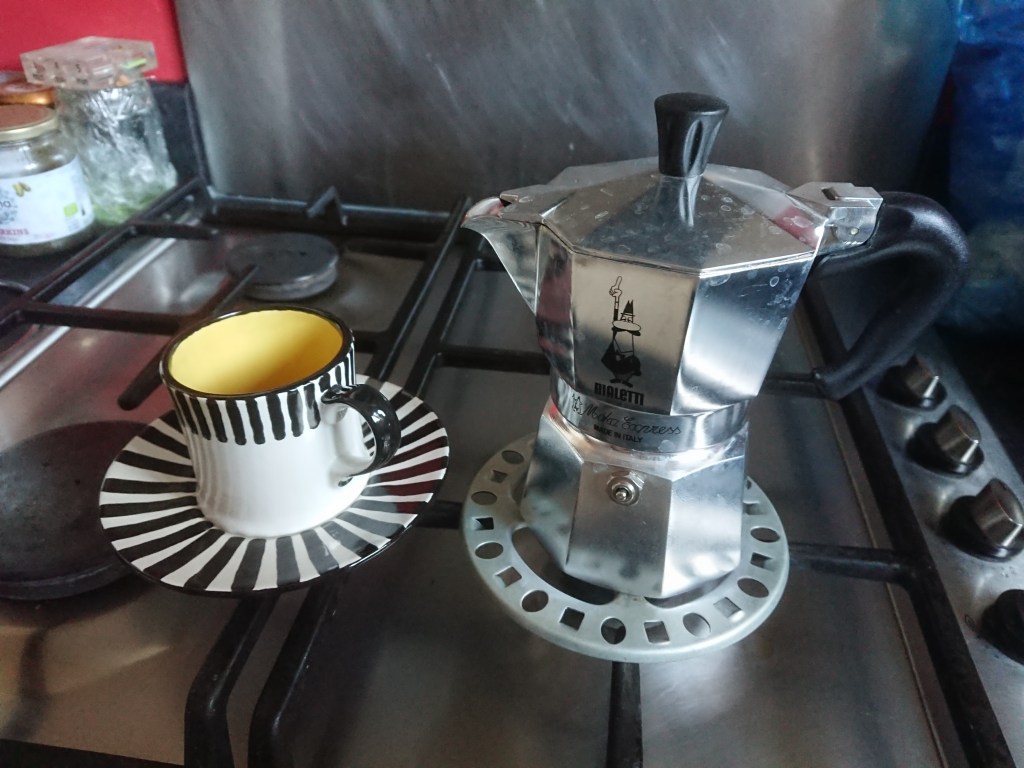
Last year I spent my birthday money on a moka pot and a hand grinder. On Saturday mornings, I grind just the right amount of coffee beans. (I’ve already set up the grinder, through a process of trial and error – not too coarse, not too fine). I take care not to turn the grinder too fast because I don’t want to burn the coffee. I load up the funnel basket thingy with the ground coffee and set the pot on the stove, on a low light because it’s only a little pot and – again – I don’t want to burn the coffee. The whole process takes about 15 minutes before the coffee is ready to pour into my little cup that Mrs M made for me.

There are machines that would make me a double espresso in a fraction of the time. But part of the pleasure of drinking this coffee is the pleasure of the process of making it. I made it, with care and some skill and with willingness to wait.

In the age of now, insisting on doing something slowly, and doing it myself when a machine could do it quicker and, possibly, better, seems counter-cultural and subversive. I’m a rebel, resisting the system with my little moka pot, holding onto my humanity against the machines that would rob me of my dignity and self-respect and turn me into a button-pushing consumer of efficiency. I don’t mind waiting. Waiting time is not wasting time but it’s a gift when I can stop and reflect and notice stuff and appreciate the world. I think life is better when it’s lived at three miles per hour. Whether it’s cranes or coffee or tuning a guitar or navigating with a map or making bread (that’s a new year resolution by the way – the machine is too easy!) – I want to hold onto my humanity and what few skills I have. I don’t want to contract out more of my life than I must – I want to live it as fully as I can. With a lovely coffee.

And there was a shepherdess

Here’s this year’s Christmas story for you…

You say that it’s a fairy story for children, but while it’s true that I was a child, there were plenty of adults present who saw what I saw. What’s more, those were angels, not fairies. You say the facts don’t add up and that the dates don’t match, but dates don’t mean much when time stands still and all eternity is contained in one single moment. You say I’m just an old woman, and it’s true that sometimes I forget my grandchildren’s names, but how could I ever forget the night when I held all the love and light and truth of the universe in my arms? You say such a thing can’t happen, but it happened to me.

Listen, and I’ll tell you. I was about five years old, just a tiny, fierce little thing, always in trouble. I’d had a very bad day, just told off and punished from waking up to supper time. I had a baby sister whom I wished had never been born and I guess I’d let my resentment show too much. So, as my father and my oldest brother were getting ready to go out to the fields for the night shift looking after the sheep, mother bundled me off with them. “She’s just not safe around the baby,” she said.

So off we went into the night. I didn’t want to go. It was bitterly cold – one of those nights when there’s so much ice in the air that the stars have haloes around them, and the wind carries a knife. And the sheep stank. I crouched down near the mean little fire the men had going and put on my best scowl. “Just stay there and keep quiet,” said father. I stared into the flames. It was going to be a long night.

The next thing I knew, the sky was alight and alive. The haloes weren’t around stars but around enormous, golden, sparkling people, hovering on huge graceful wings. They were singing and the music was like it came from beyond the stars, it was so breathtakingly beautiful. I looked around me and the men were on their knees, and their weather-beaten under-nourished faces looked almost as beautiful as the angels. I was terrified and I ran to my father and buried my face in his cloak.

The singing faded and one of the men said, “Let’s go and see for ourselves.” Father got up and said to me, “Well, are you coming?” There was no way I was going to stay out there on that hillside, so I trotted alongside the men towards the village.

We came to Ben’s house. There, where he kept his milk goat, was a baby lying in the goat’s feeding trough. I was horrified. Babies ruined everything and another one was the last thing I wanted to see. This was the worst day of my life.

I felt a hand on my head. It was the baby’s mother. She seemed so peaceful and kind and she said, “You’re such a good girl. Thank you for coming to see us.” And I sort of felt like perhaps I was good, and that felt good. I peered over into the hay and looked at the baby sleeping. Gingerly, I reached out a finger and stroked his cheek. I could feel my father tensing up beside me – after all, I wasn’t safe around babies. But the baby’s mother said, “Would you like to cuddle him? It’s OK.” I leaned over into the manger and put my arms around him. He opened his eyes and held my gaze and it was like looking into the night sky, into the darkness beyond the stars, like all of everything, the depths of the ages, was there in his eyes and yet I didn’t feel lost or frightened like I had on the hillside. As I held him, I felt held. Eternal arms were underneath me and swaddled within mine. I felt I was safe, that I was OK, that I had nothing to fear.

It didn’t make me a saint. But afterwards, whenever I held my baby sister, and when in time I held my own children and then their children, I remembered that baby in the hay and it was like I was with him again. Every time my hands have held another hand, I have known that I am held and you are held and the world is held in a love greater than could be imagined – a love I first held in that baby long ago and that has never let me go.

You say that it’s all in my head, but when I look back over my life, I can only make sense of it in the light of that night. You say that people don’t change and we have to accept the world as it is, but I tell you that I was there when the glory of God was revealed to a bunch of peasants so poor they didn’t even own a single share of one of the sheep they were looking after, but that night they felt like the whole world belonged to them and it would never be the same again. You see, I was there the night Jesus came.